
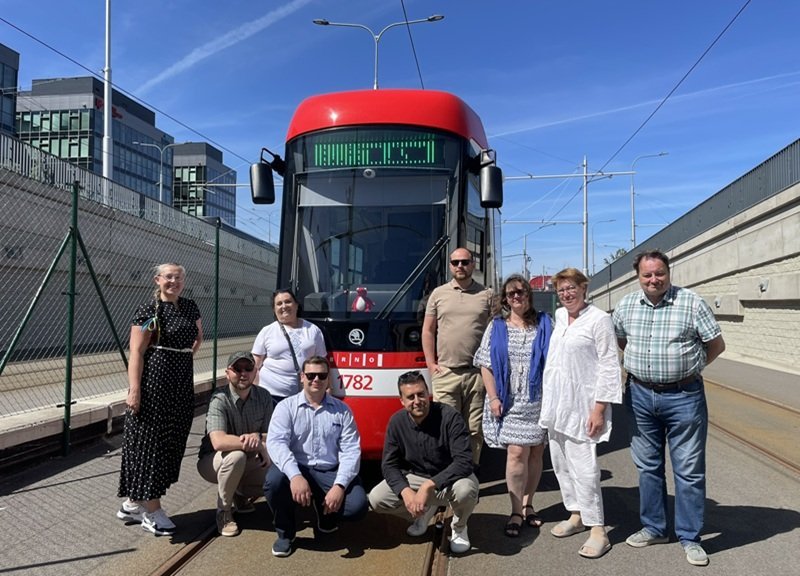
In May 2026, the NGO “Vision Zero” organized a study trip to the cities of the Czech Republic to study their experience in the development, arrangement and operation of tram and trolleybus systems. The participants of this trip were managers and specialists of the State Enterprise “Scientific Research and Design and Technological Institute of Urban Economy”, representatives of the Ministry of Community and Territorial Development of Ukraine and the State Service of Ukraine for Transport Safety.
In the cities of Prague and Brno, participants conducted field surveys of the infrastructure, assessed the operation of rolling stock on routes, visited depots, and discussed the features of organizing transport services with local carriers.
Why Czech Republic?
The Czech Republic is a country of electric transport. With a population of about 11 million people, as many as 21 cities in the Czech Republic have trams or trolleybuses. For comparison, in Belgium, with about the same number of inhabitants, electric transport is much less developed and covers only 7 cities, and in all three Baltic countries (with a combined population of about 6 million people) only 5 cities have electric transport. In terms of its historical, economic and geographical context, this country is much closer to Ukraine than, for example, Switzerland, Italy or France, where tram and trolleybus systems also exist in large numbers. Therefore, it was the Czech Republic that was chosen for the research trip.
The cities of Prague (1.4 million people), Brno (400,000 people), Ostrava (290,000 people) and Pilsen (190,000 people) have both tram and trolleybus systems. This article focuses on the tram networks of the two largest cities in the country, Prague and Brno.
Tram system in Prague
The Prague tram network has a total length of over 150 km of lines (over 570 km of routes in total) and 292 stops. The network covers the entire city and even some suburban areas. It operates 26 daytime and 9 night routes, with an interval of 4-8 min. during peak hours on daytime routes and 30 min. on night routes.
The tram fleet consists of about 780 units of various models, based in eight depots around the city. About half of the rolling stock is accessible to people with reduced mobility, i.e. has a low floor. The annual passenger traffic of the tram network is almost 350 million passengers (2024).
The tram network is constantly developing: an additional link-bridge is being built on Václavské Nameste and ul. Vinohradská in the city center and a new line on ul. Počernická. There are plans to develop the network on other streets and districts, into the suburban area.
Tram system in Brno
The Brno tram network has a total length of over 70 km ( over 120 km of routes in total) and 150 stops. The network has 14 routes, with an interval of 5-10 minutes , most of which run from 5 am to 11 pm.
The tram fleet consists of over 300 units of various models, two thirds of which are accessible to people with reduced mobility. The rolling stock is based in 2 depots: Pisárky and Medlánky. The annual passenger traffic of the tram network is over 14 million passengers .
The tram network is actively developing: sections in the historic center are being reconstructed, new sections are being opened both along the streets and high-speed sections in tunnels and on a separate track, especially in the neighborhoods on the outskirts of the city. Currently, an extension of route No. 1 along ul. Vejrostova is being built.
Research trip results
The participants of the research trip conducted and documented field observations, comparing what they saw with the provisions of regulatory documents of the Czech Republic and Ukraine. Attention was focused on infrastructure: tracks, contact networks, stops, design solutions for integrating trams into city streets and combining with other mobility modes.
Distance to development
Ukrainian building codes create serious restrictions and obstacles for designing tram lines in existing urban development: DBN B.2.2-12 “Planning and development of territories” allows tram lines to be laid exclusively along main streets, and in historical city centers it prescribes “off-street areas… in shallow tunnels or on overpasses”. In addition, according to DBN B.2.3-18 “Tram and trolleybus lines”, the distance from the track axis to residential or public buildings must be at least 20 (19.8) meters, which actually makes it impossible to integrate modern ecological transport into a dense urban fabric. So, let's see how it works in the Czech Republic.
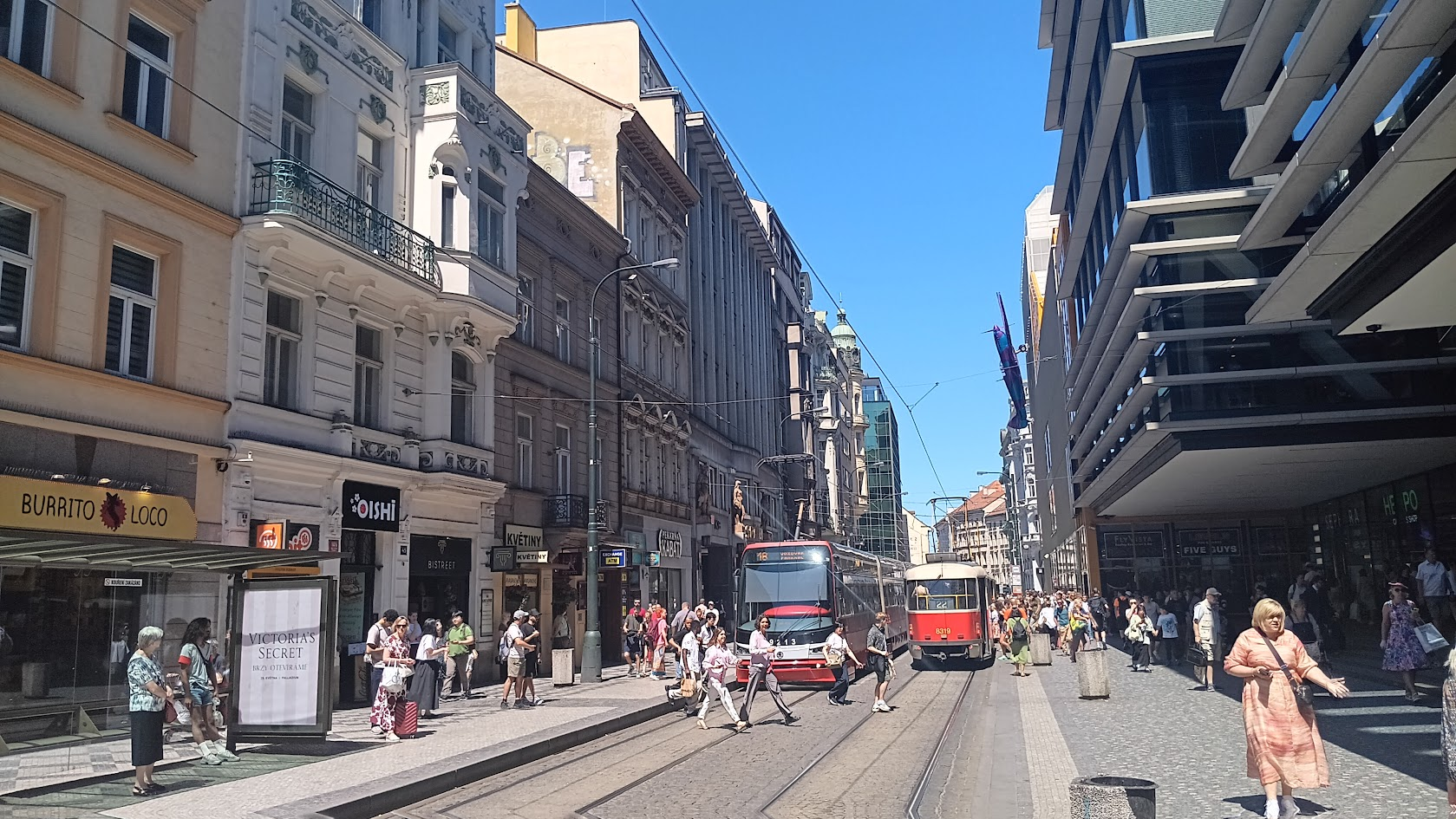
Prague: ul. Spálená, metro stop “Národní trída”. Distance to the houses is about 3-5 m. Private transport is prohibited on the street: tram-bicycle-pedestrian zone.
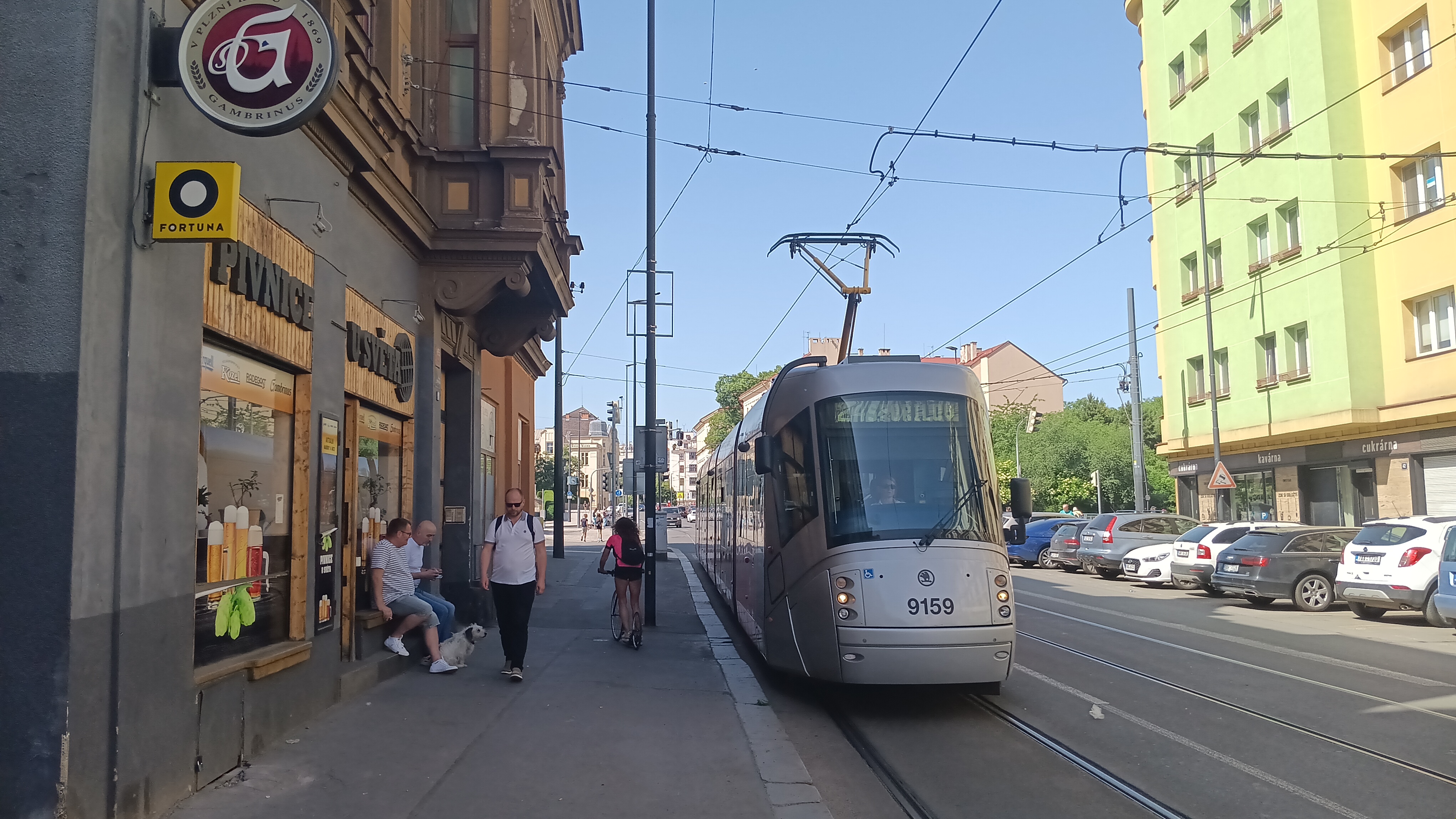
Prague: ul. Zenklova. Mixed traffic of trams and vehicles. Distance to houses about 3 m.
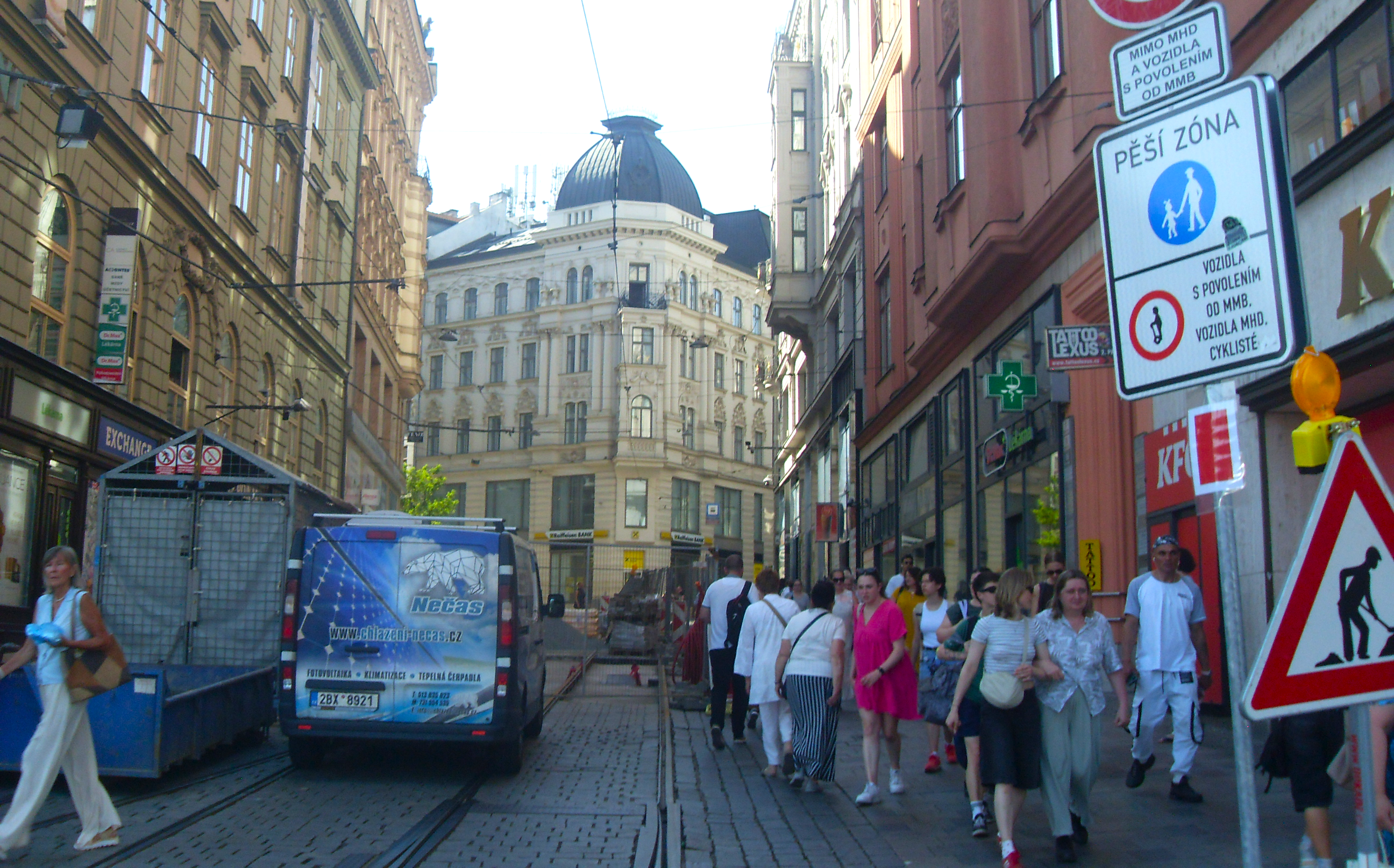
Brno: ul. Masarykova. Tram in the pedestrian zone of the historic center, at the same level as the sidewalk (line under reconstruction). Distance to the houses about 2-4 m.
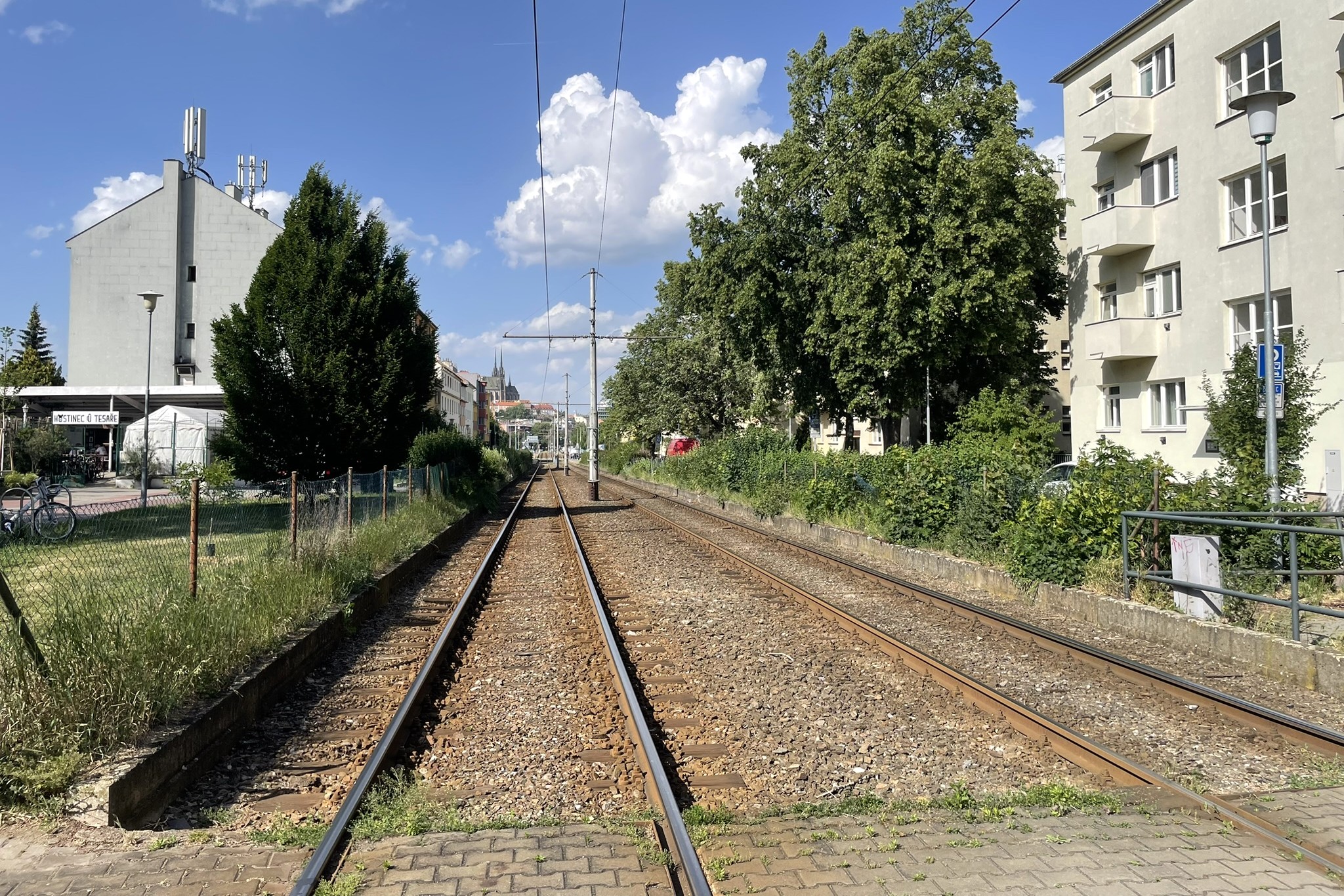
Brno: ul. Renneská. High-speed section (60 km/h) on a residential street (zone “30”) in a dense residential area - fenced with a net and bushes. Distance to houses from 5 to 10 m. The contact network is suspended on brackets.
As can be seen in the photo, neither the small distance to the houses, nor the category or mode of traffic on the street are obstacles to the arrangement of tram traffic in the Czech Republic and do not lead to negative consequences. The absence of excessive restrictions in regulations and in practice allows Czech cities to plan and lay tram lines in dense buildings and harmoniously combine tram traffic with bicycle and pedestrian traffic in the historic centers of cities.
Features of the catenary network
Ukrainian standards (DBN V.2.3-18 “Tram and trolleybus lines”) require a specific height for hanging the contact wire: not less than 4.7 m in the gates (passages) of buildings and not less than 4.2-4.4 m under engineering structures (usually overpasses). Only in “high-speed tram” tunnels – which in Ukraine are only available in Kryvyi Rih – is the contact wire height allowed to be 3.9 m. The standards also require a distance of not less than 3.5 m between the contact wires of adjacent tram and trolleybus lines. The practice of the Czech Republic has shown a different regulatory regulation, more flexible and focused on safety and functionality.
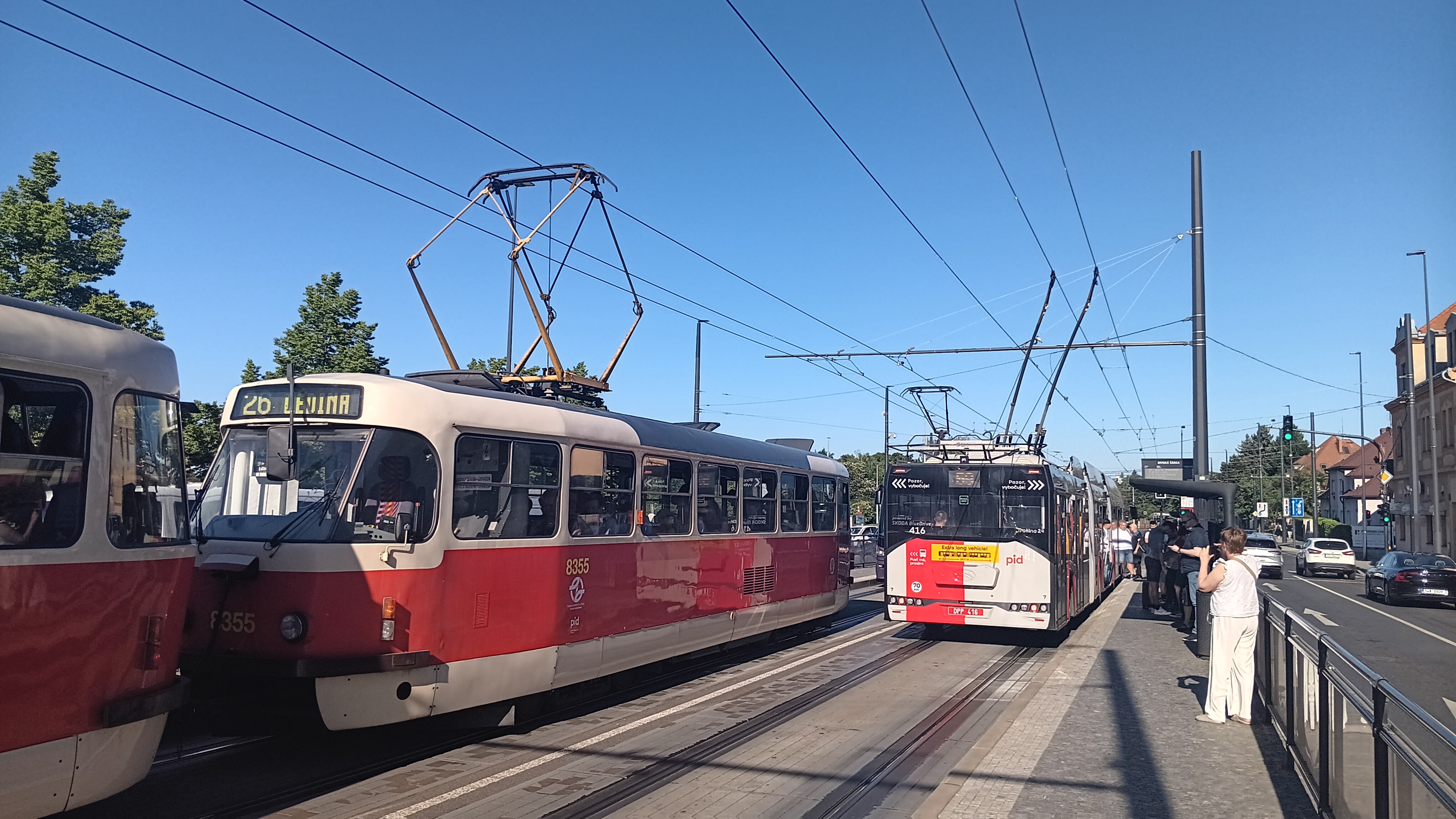
Prague: ul. Evropská, stop Dívoká Šárka.
In Prague, in different districts, the research group observed common lanes and common stops for trams and trolleybuses, and the distance between tram and trolleybus wires was 1.0-1.5 m. It is also visible that the trolleybus wires are placed above the landing area of the stop, which is prohibited in Ukraine. The entire contact network is suspended from a common bracket on a support on one side of the canvas.
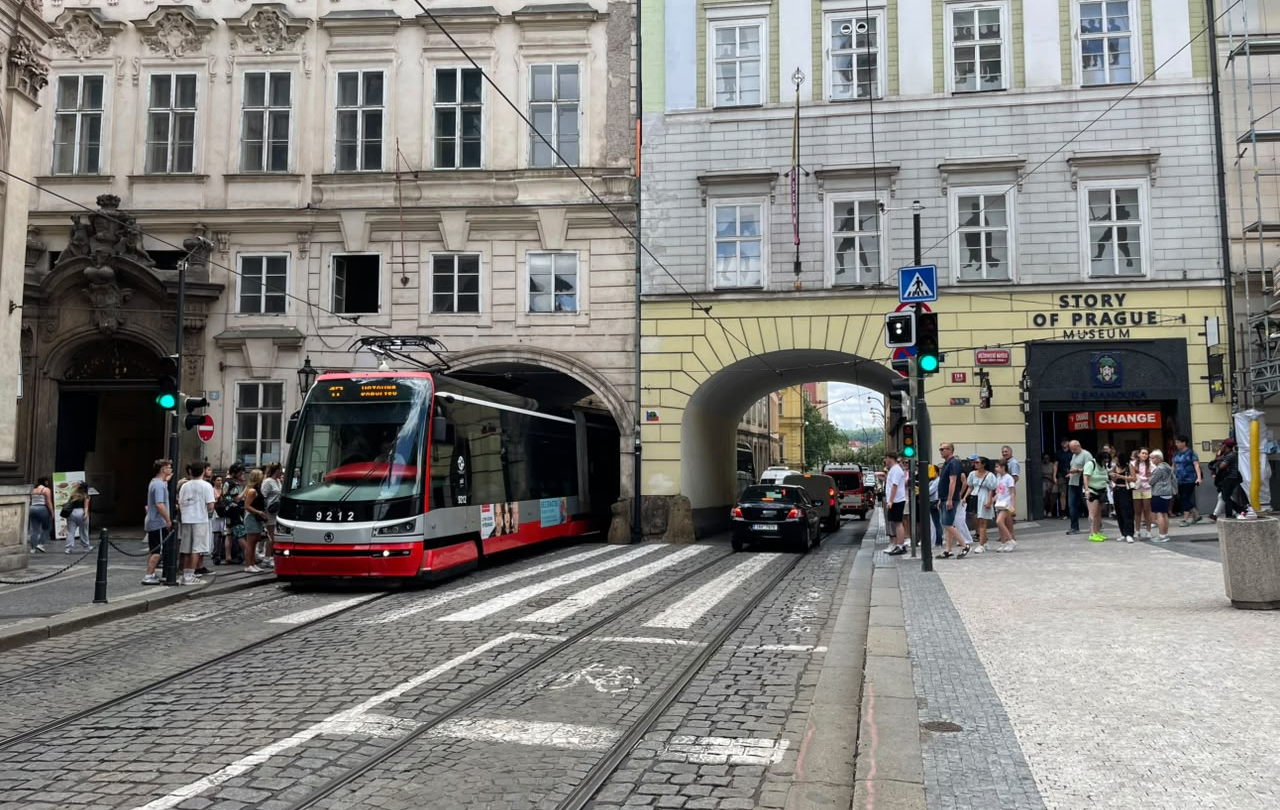
Prague: ul. Křižovnická, a famous location in Prague, where the tram runs under the arch of an old house. The height to the contact wire is about 3.8-3.9 m, the distance from the track to the walls of the arch is no more than 2 m.
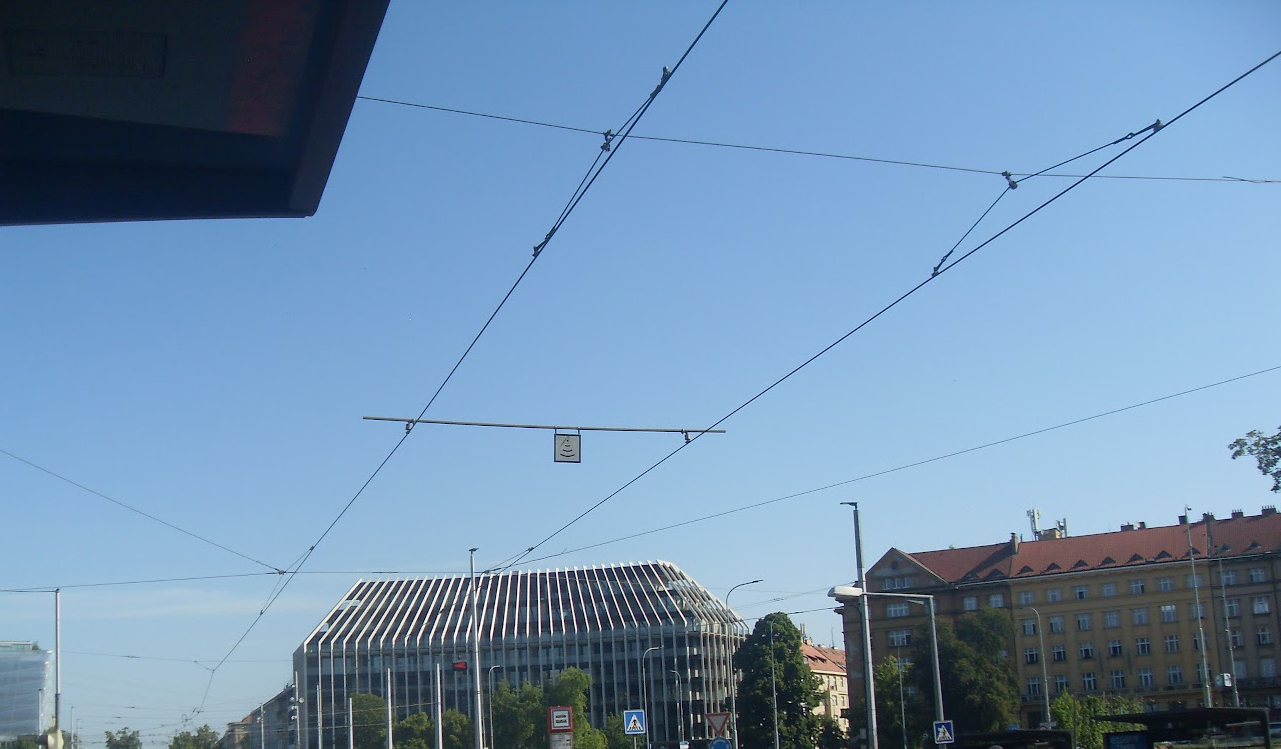
Prague: ul. Svatovítská, stop Vítězné náměstí.
Here and on most sections of the tram network, the catenary has a “delta” suspension, which makes the contact of the pantograph with the wire softer, allows higher speeds (than with a rigid suspension), and does not require longitudinal supporting cables (as with a compensated contact suspension). It is also stated that the wear of the wire over time is half that of a conventional “rigid” suspension.
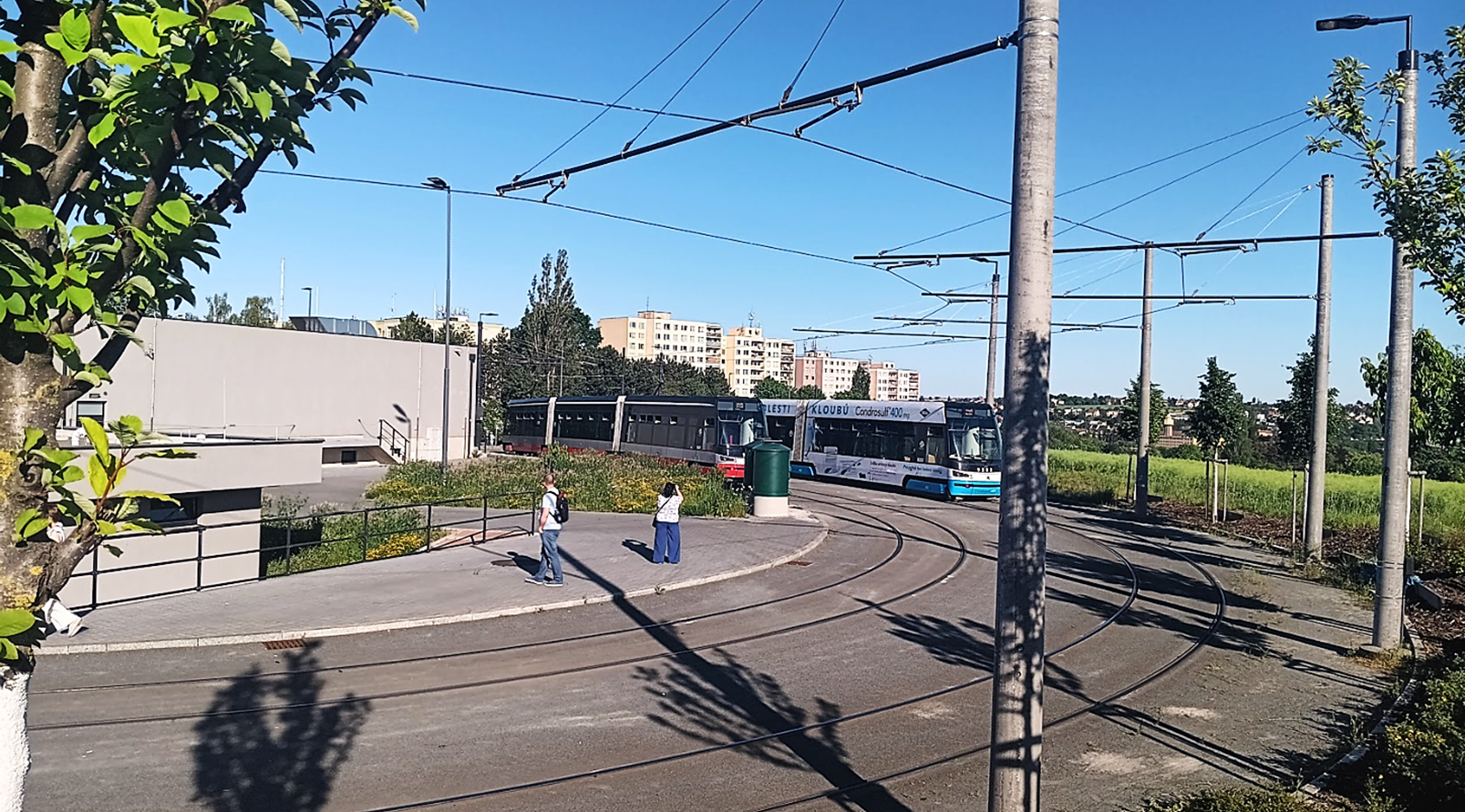
Prague: new tram line Dívoká Šárka – Dědina, turning circle at the Dědina terminus. Catenary of both tracks on common brackets fixed to supports on one side of the tracks.
Organization of stops
Ukrainian standards ( DBN V.2.3-5 “Streets and roads of settlements”, DBN V.2.3-18 “Tram and trolleybus lines”) provide for the placement of tram stops, as a rule, spaced apart (in front of intersections and crossings, separately for trams and trolleybuses). Landing platforms should be the width of a 2-sided ramp (1.8 m, but in other standards - from 1.5 m), but it is allowed to exit directly onto the carriageway without a landing platform. Stops should be located only on straight sections with a slope of up to 4%. A survey of stops in the Czech Republic revealed many differences.
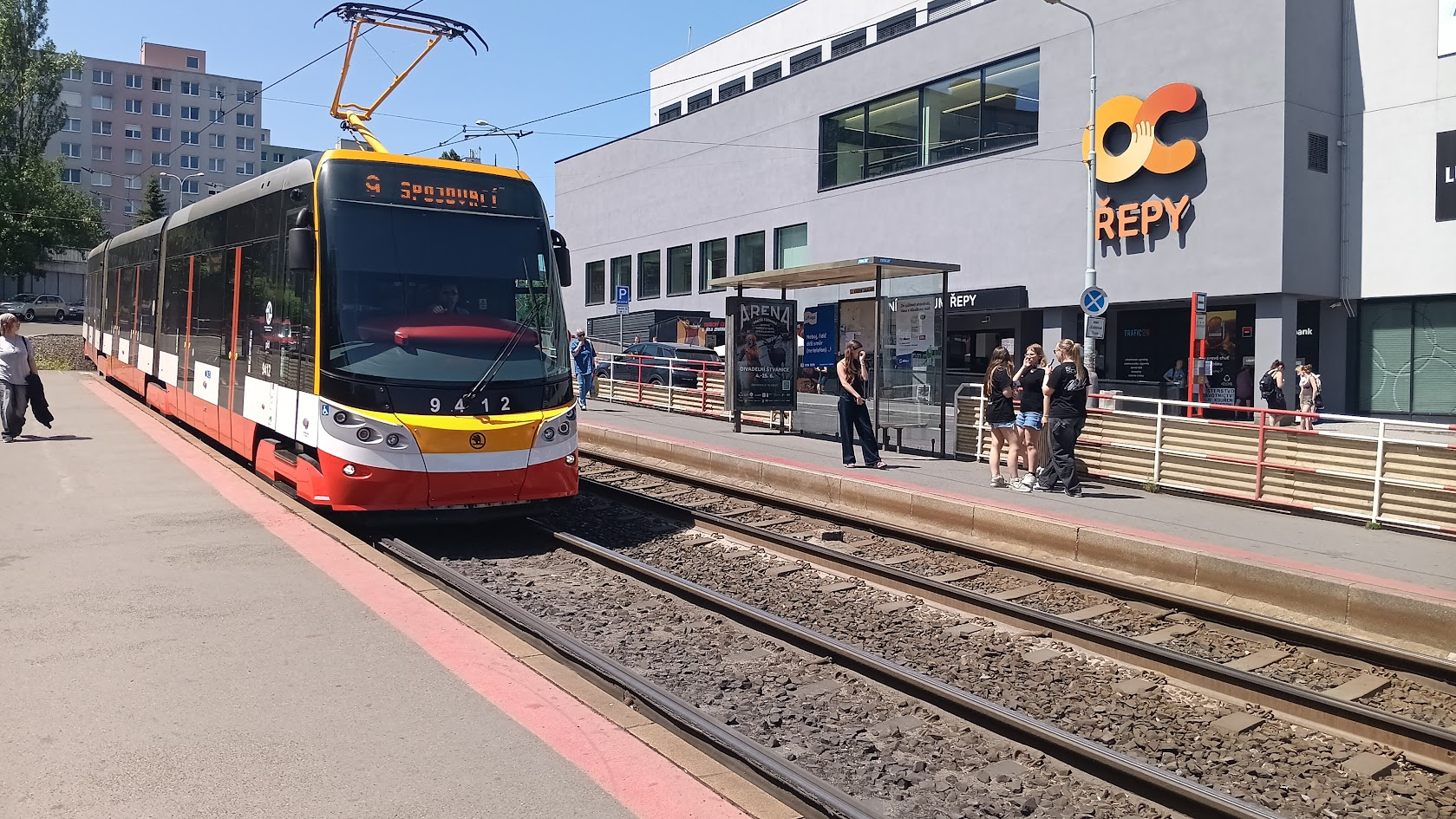
Prague: ul. Makovského, Slánská stop.
The long landing platforms of the stops (65 m each) are located opposite each other next to the shopping center (at both ends of the stops there are ramps and pedesrtian passes, one of which leads directly to the entrance to the shopping center). The height of the platforms above the rail head level is 20 cm. The stop is located on a slope of about 5%.
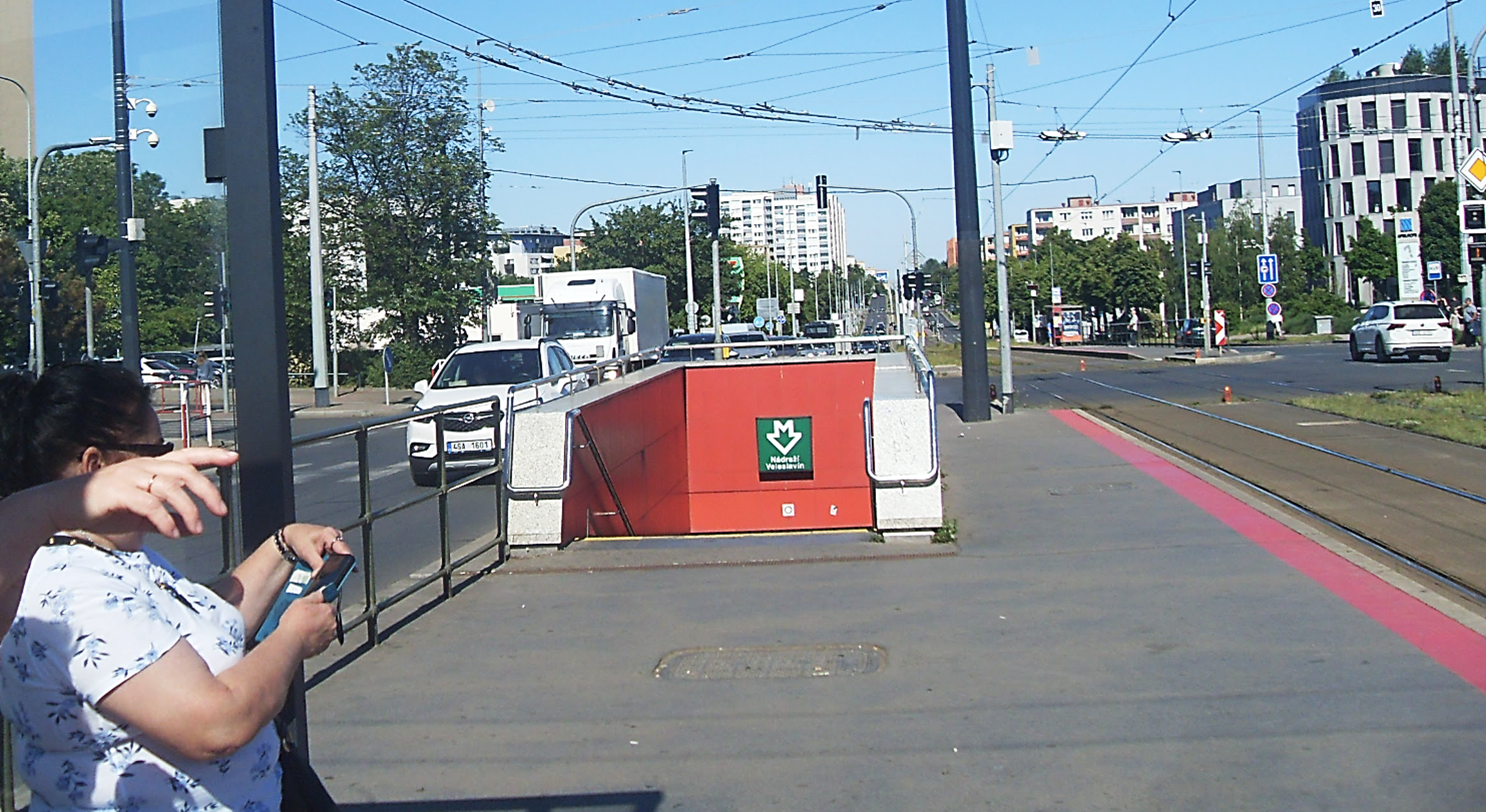
Prague: Nádraží Veleslavín interchange - tram stop.
The Nádraží Veleslavín stop is a transfer point between the metro, suburban and regional trains, buses and trolleybuses (line 59 to the airport). The underpass (also known as the entrance to the metro) is duplicated by above-ground controlled crossings to ensure barrier-free access to the stop.
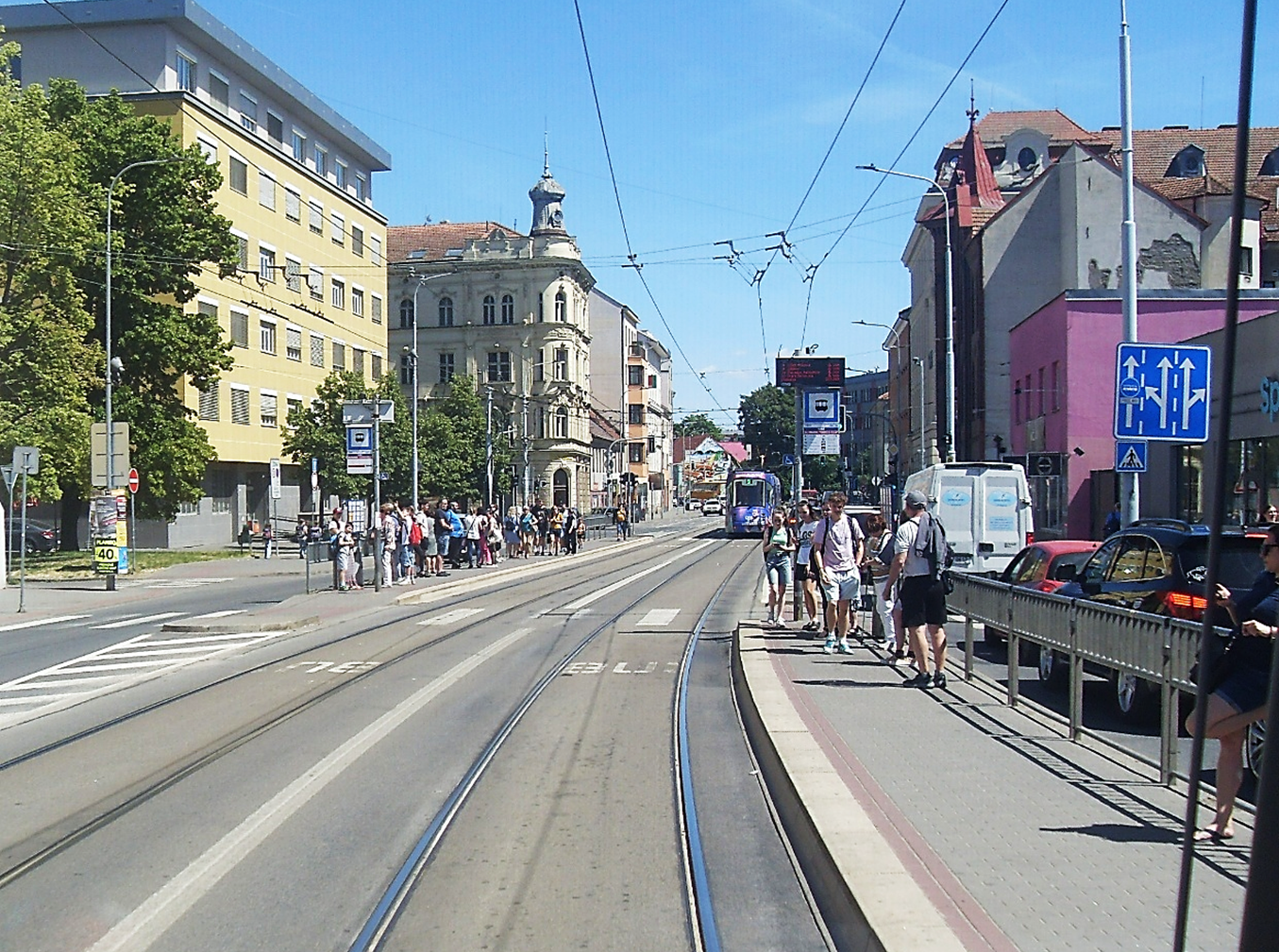
Brno: ul. Křenova, combined tram and trolleybus stop Vlhká.
The trolleybus moves on a dedicated track along tram tracks and uses stops shared with the tram. The trolleybus wires are close to the trams and above the stop platform, and the platform itself, 20 cm high, is located in a curve. A convenient level pedestrian crossing between stops is provided.
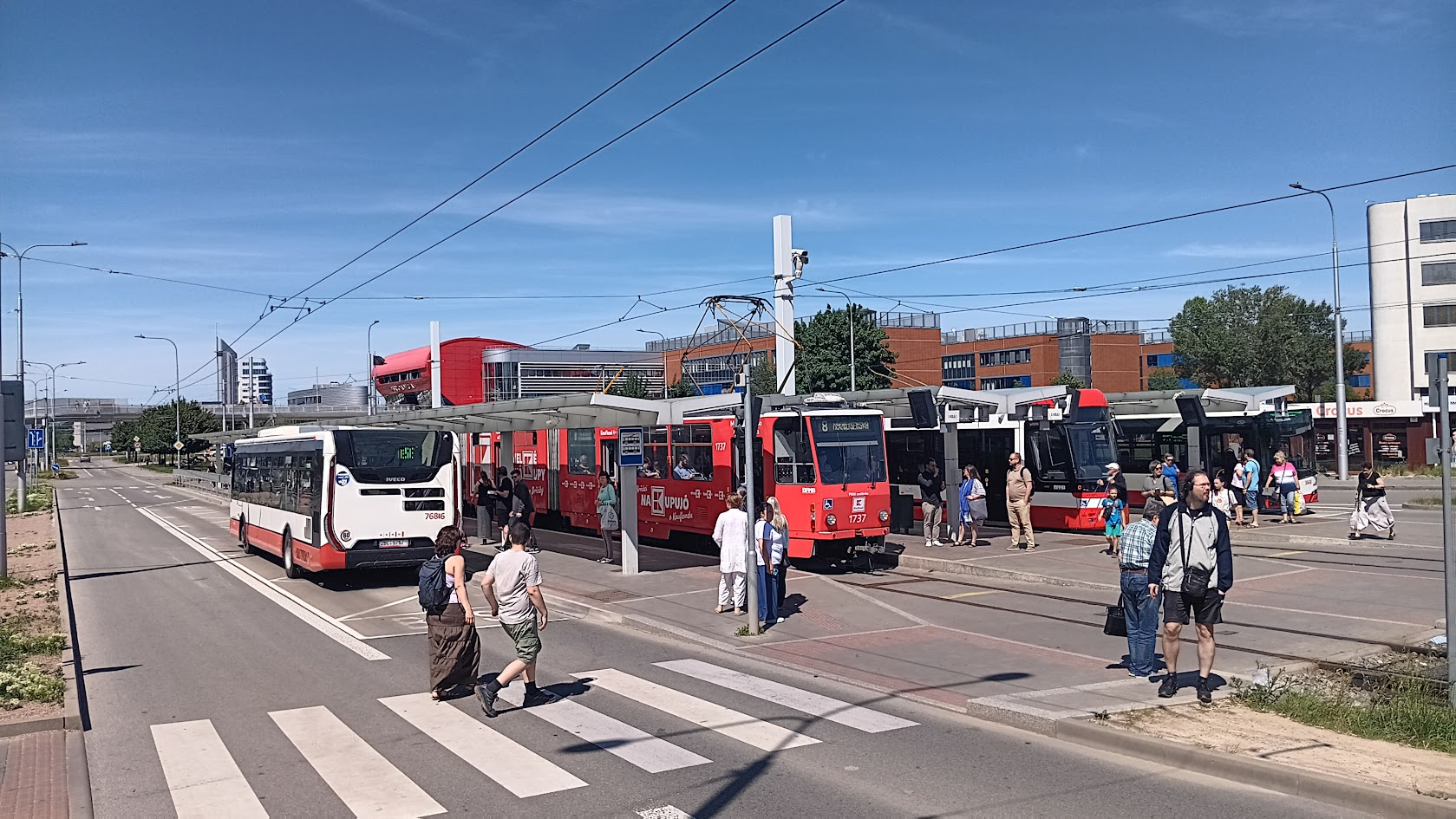
Brno: Nemocnice Bohunice transport hub.
Nemocnice Bohunice in the “Campus” district is the tram terminus and a significant interchange. It has three adjacent parallel platforms, connected by pedesrtian passes at both ends of the interchange. Transfers from bus to tram take place within one platform. Boarding and alighting are carried out on both sides of the tram (a two-cabin rolling stock with doors on both sides). Nearby is a hospital, a university campus and a shopping mall.
As we can see, tram stops are often located opposite each other - with convenient exits to attractions. They are long (60+ m) to accommodate several cars at the same time. Often, several parallel platforms are equipped for different types of transport, or trams and trolleybuses use common platforms. The height of the platforms (20–25 cm) is suitable for different rolling stock. The research group has never seen stops where the exit from trams is provided directly onto the roadway. Even in tight urban planning conditions in Prague, a platform is equipped, albeit of minimal width, sometimes narrower than 1.5 m.
Interaction with pedestrians, tram in pedestrian zones
Ukrainian norms (DBN B.2.2-12 “Planning and development of territories”, DBN V.2.3-5 “Streets and roads of settlements”) do not provide for tram traffic in pedestrian zones. The exceptions are Lviv and, to a lesser extent, Dnipro and Mykolaiv, where such areas have been formed historically. In addition, according to the same norms, the intersection of lines or the approach to stops (stations) of a light rail tram is provided only at different levels (underground or overpasses), despite the existing exceptions in Kyiv. And if the transfer node includes a metro or light rail station, all crossings at the node must be at different levels with transport (including through streets). Let's look at how the tram interacts with pedestrians in the Czech Republic.
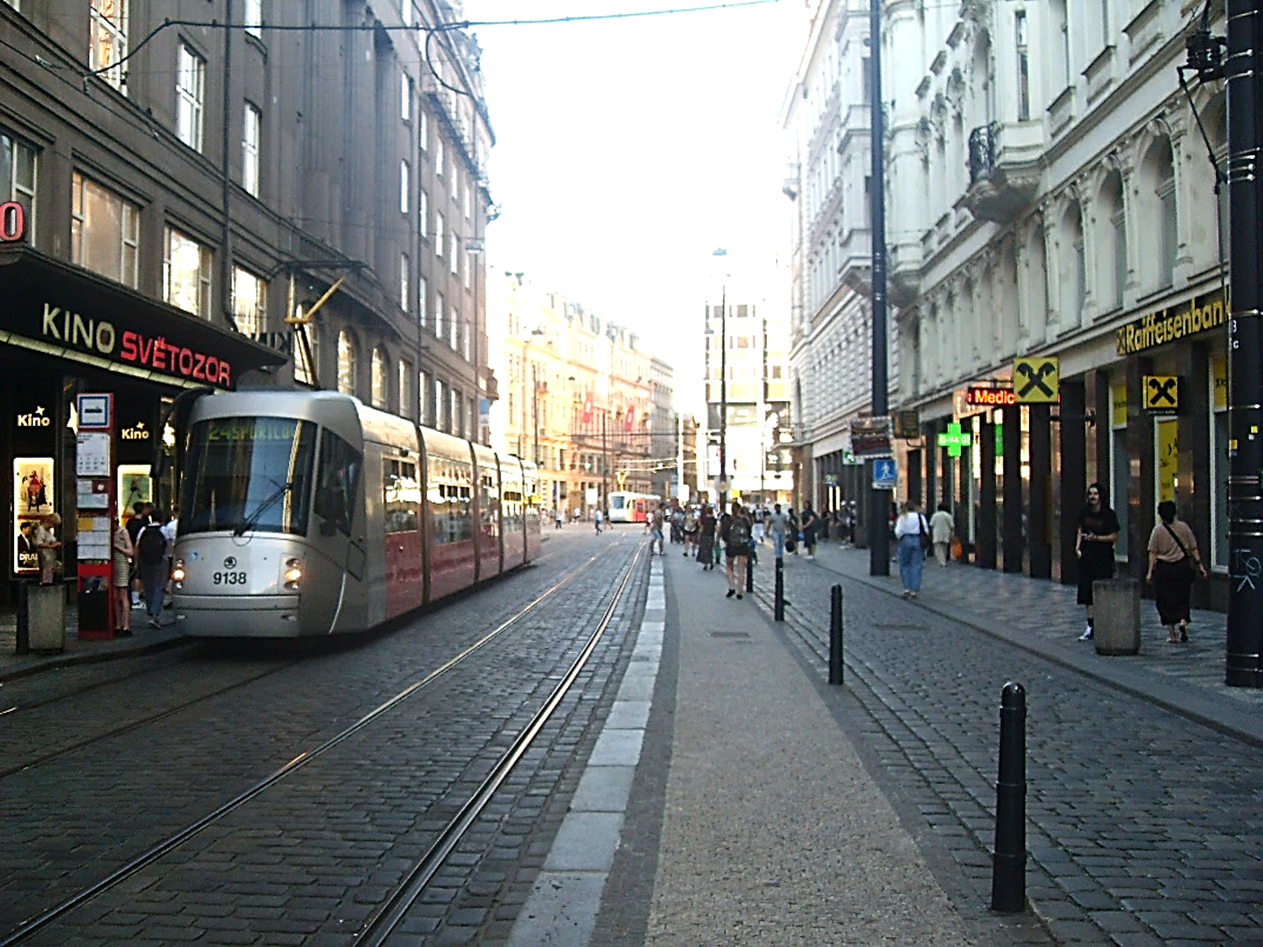
Prague: ul. Vodičkova, Václavské námestí stop.
A tram in a pedestrian zone in Prague has a separate lane marked by a curb and posts. People can freely cross the tracks when there is no tram in motion.
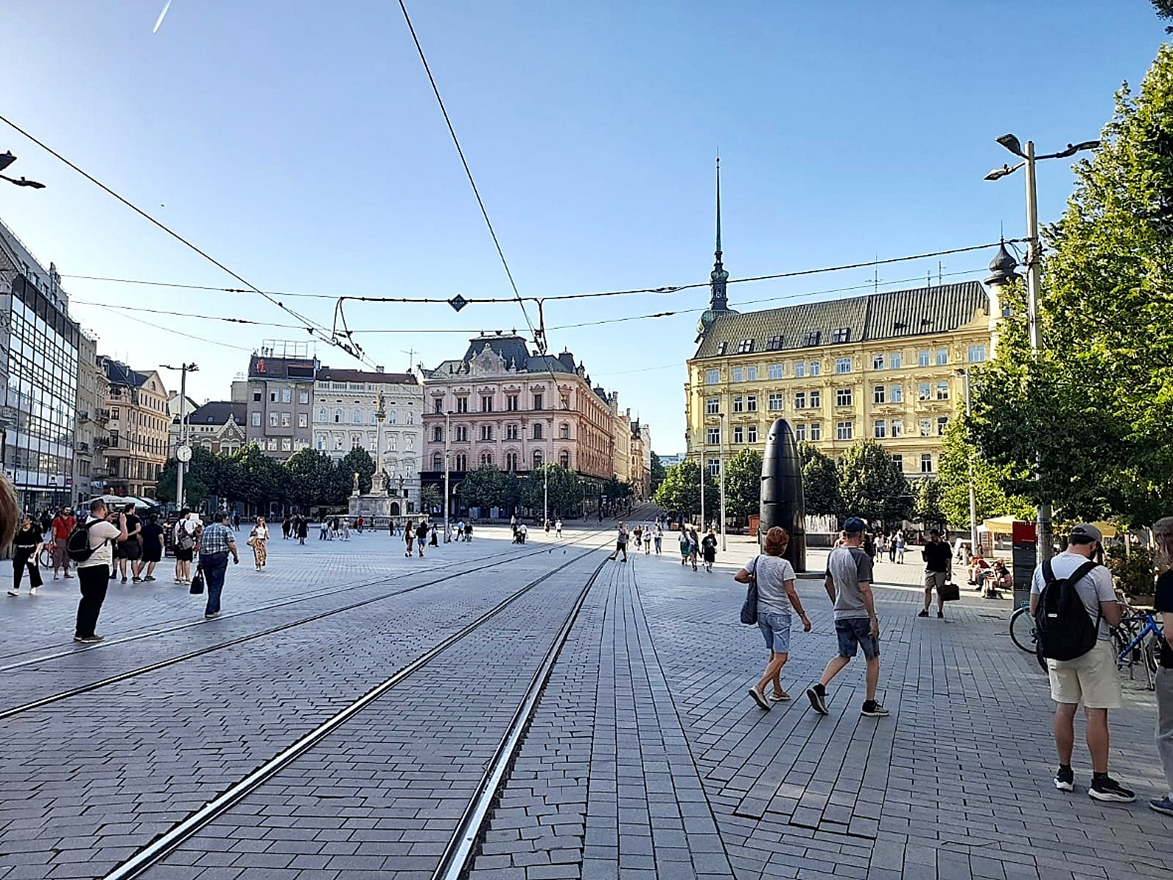
Brno: Náměstí Svobody - the central square in the historic city center. Tram line after reconstruction.
The tram line in Brno runs right through the central square - Liberty Square. The track is made at the same level as the pedestrian surface, highlighted only by the pattern of the paving stones. Free movement of people on the square.
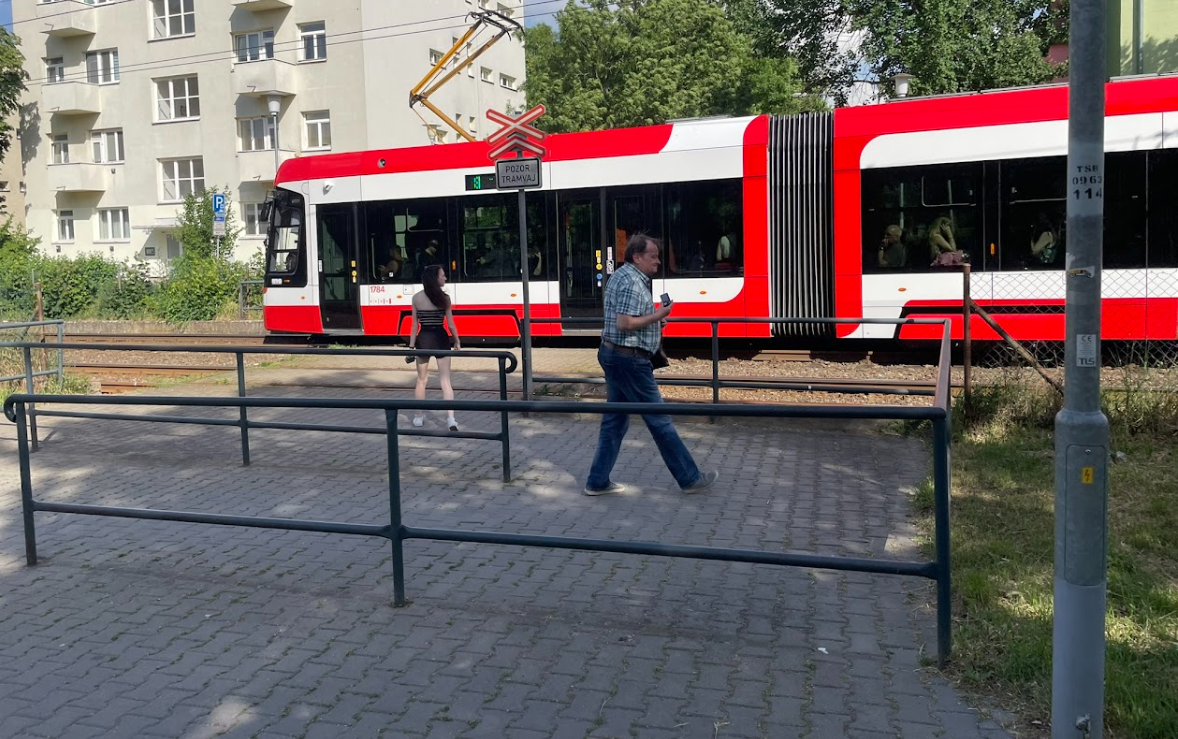
Brno: ul. Renneská, a winding section of the tram line.
In Brno, there is a high-speed section (60 km/h) on a residential street (zone “30”) in a dense residential area. An unregulated level pedestrian crossing with a zigzag path to ensure safety and proper visibility. Trams have absolute priority at the crossing.
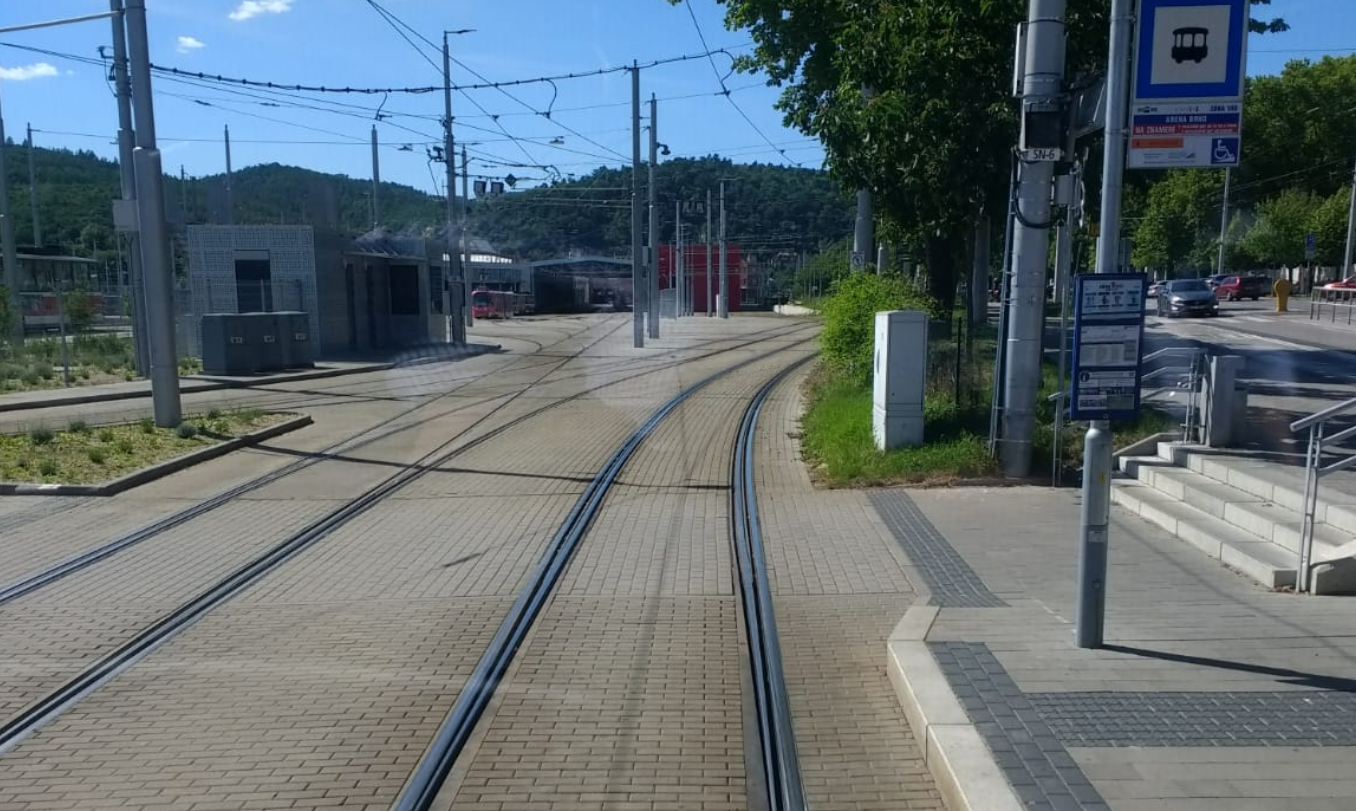
Brno: ul. Hlinky, stop Lipová.
Stop at the new sports complex "Arena Brno", next to the Pisárky depot. The level crossing is laid through "pull-out" switches with flexible tips. Trams have priority at the crossing.
As we can see, in the Czech Republic there are no excessive restrictions on the placement of tram lines in pedestrian zones, instead, various options for safe traffic organization in such places are used (without separation, with separation by paving stones, demarcation by curbs and columns). Ground pedestrian crossings are also available across expressways, in particular at intersections and stops. There are solutions with laying ground crossings in the zone of switch points, which is unacceptable in Ukraine.
Tramway track: different approaches to solutions
The norms of Ukraine (DBN V.2.3-18 “Tram and trolleybus lines”) provide for a combined track for all types of transport, separated from the carriageway or its own track, independent of the road (outside the built-up area). A separate track common to trams and non-rail transport is not provided for, and the so-called “green tracks” (lawn or mixed grass) are not provided for, with structures other than the rail-sleeper grid. In Ukraine, the norms provide only for the so-called “block track” of one technology ( BKV-plates ), with neckless rails (rail profile without a base and “legs”), despite the fact that other structures with concrete slabs are used, for example in Lviv, Dnipro and Kharkiv. In the Czech Republic, different solutions are used for the arrangement of the track and the design of tram tracks.
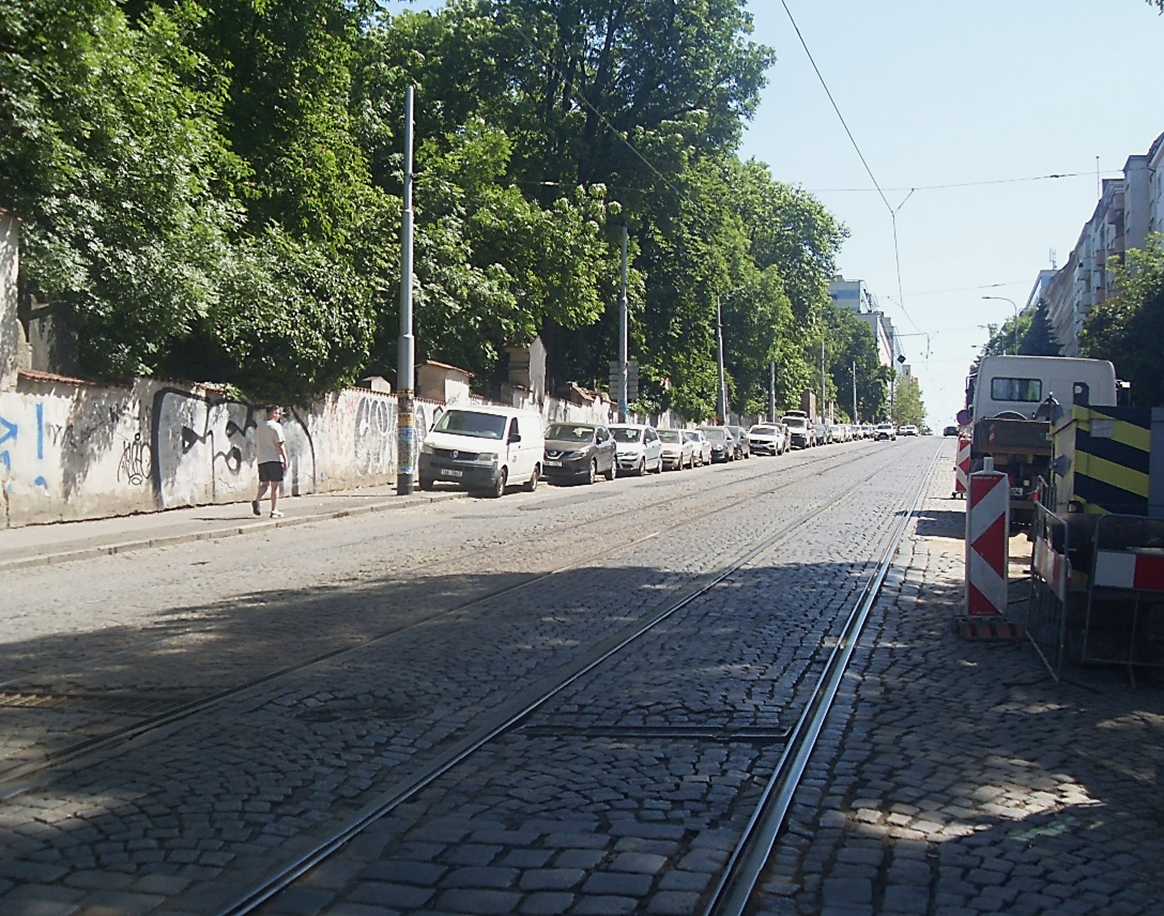
Prague: ul. Jičínská. The steepest descent in Prague with a gradient of 8%. The track is combined, there are no restrictions for car traffic. The street is paved with basalt paving stones.
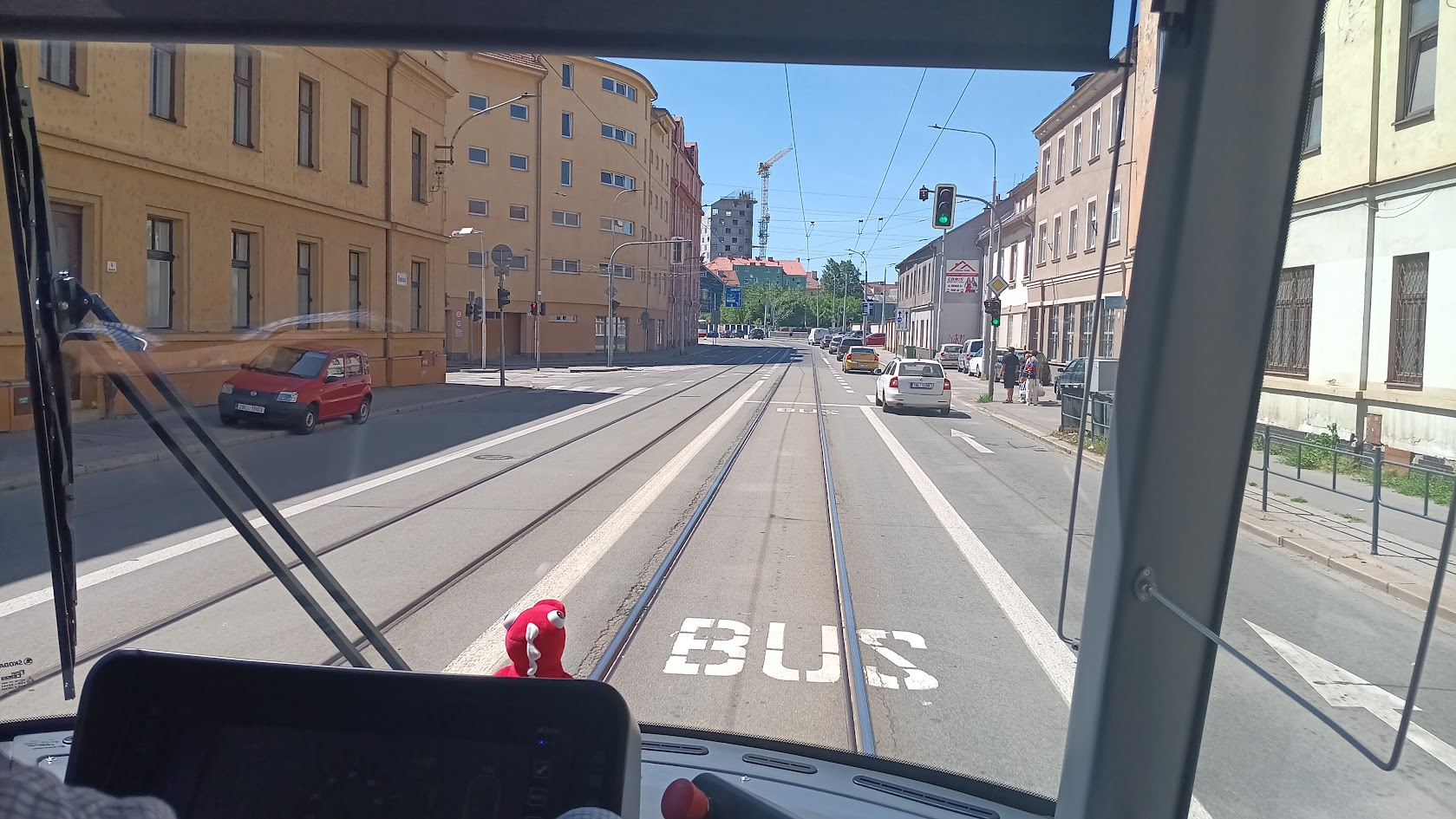
Brno: ul. Křenova. A dedicated lane for the combined movement of trams, trolleybuses and buses on the common carriageway of the street, separated only by markings.
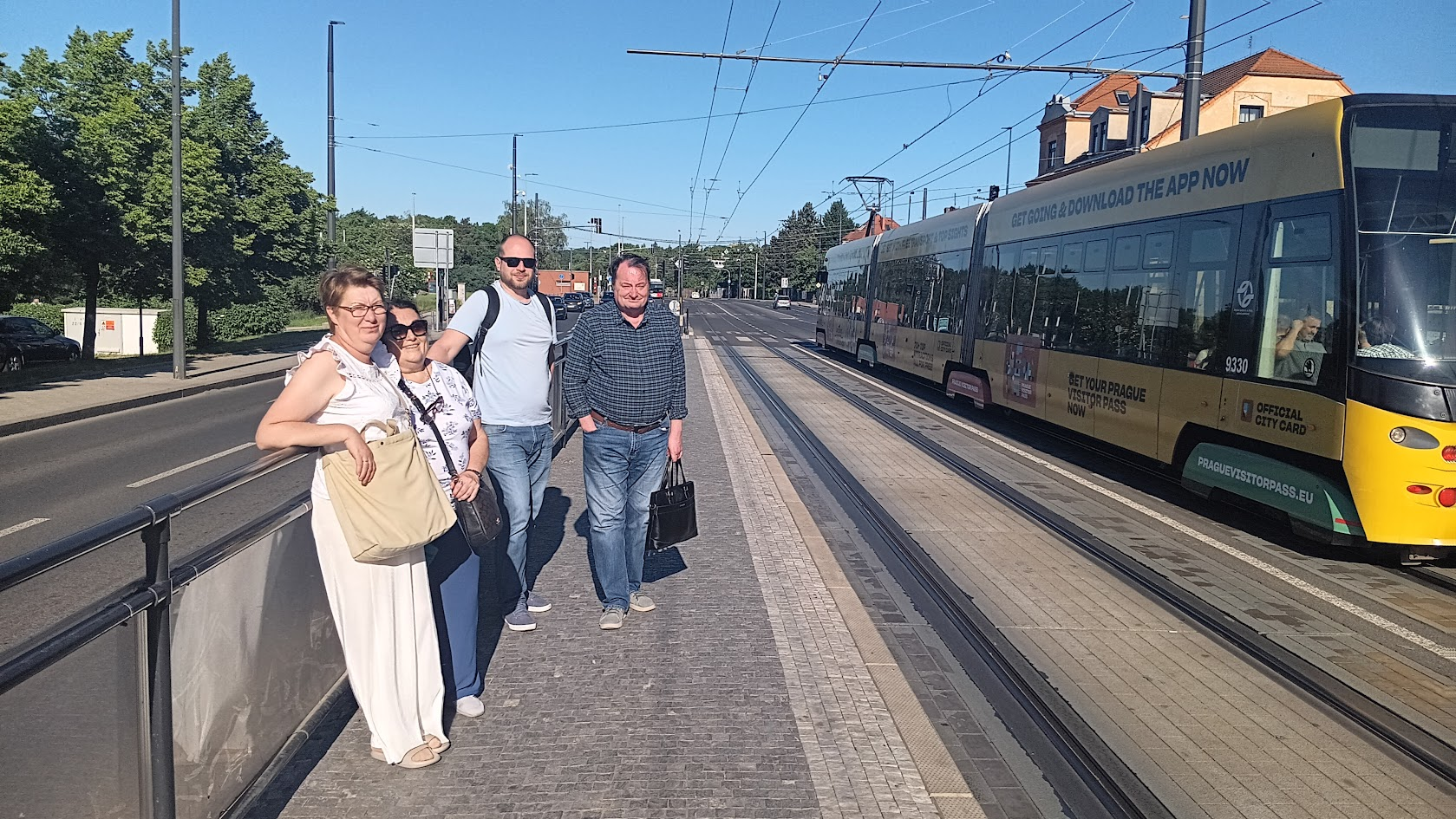
Prague: ul. Evropská, stop Dívoká Šárka - combined bus, trolleybus, tram stop. Separate lane for trams and trolleybuses, paved with cobblestones in the stop area.
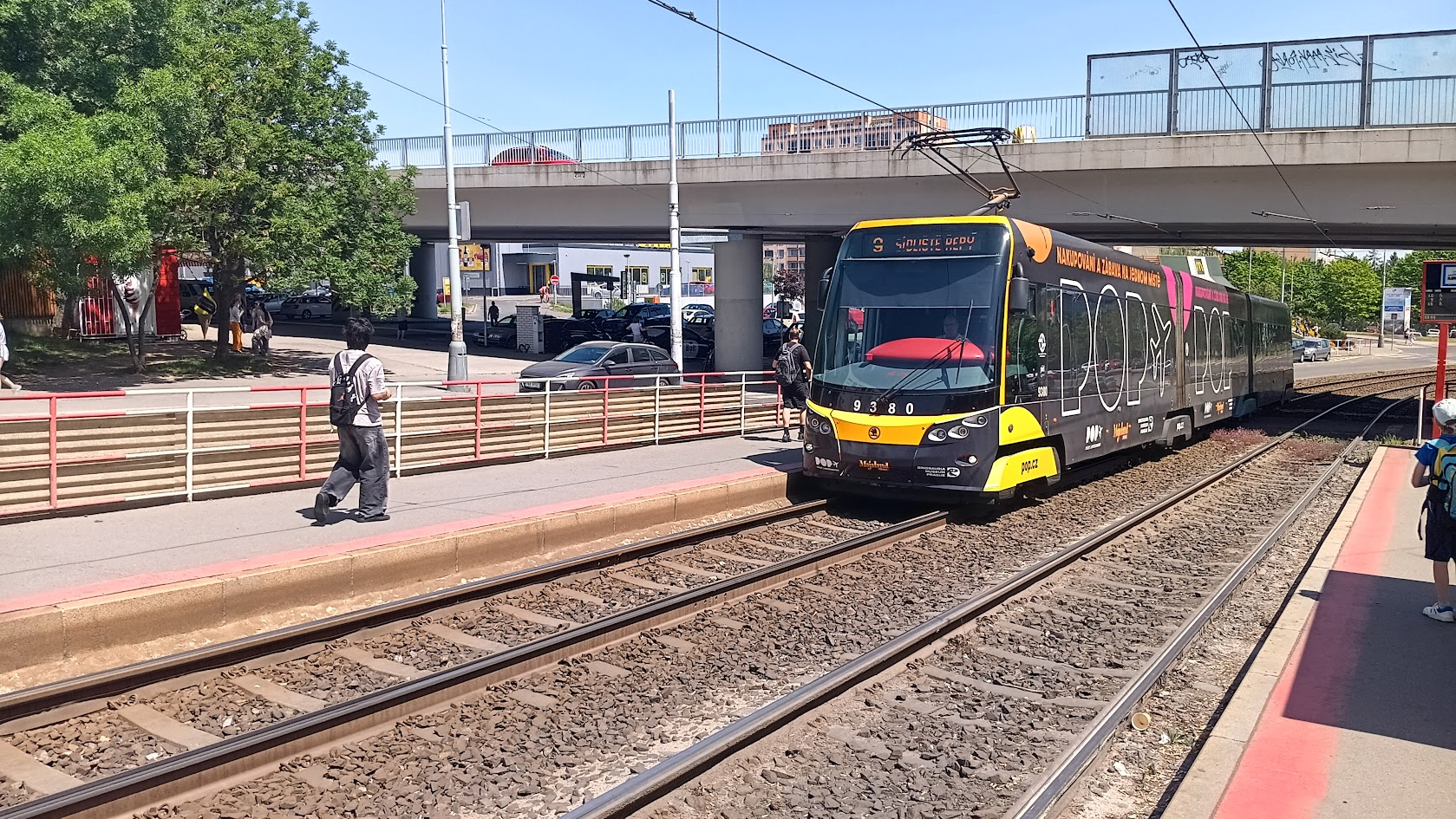
Prague: ul. Makovského, stop Slánská. Separate tram track, open tracks (no filling between the rails). Rubber flooring for pedesrtian passes.
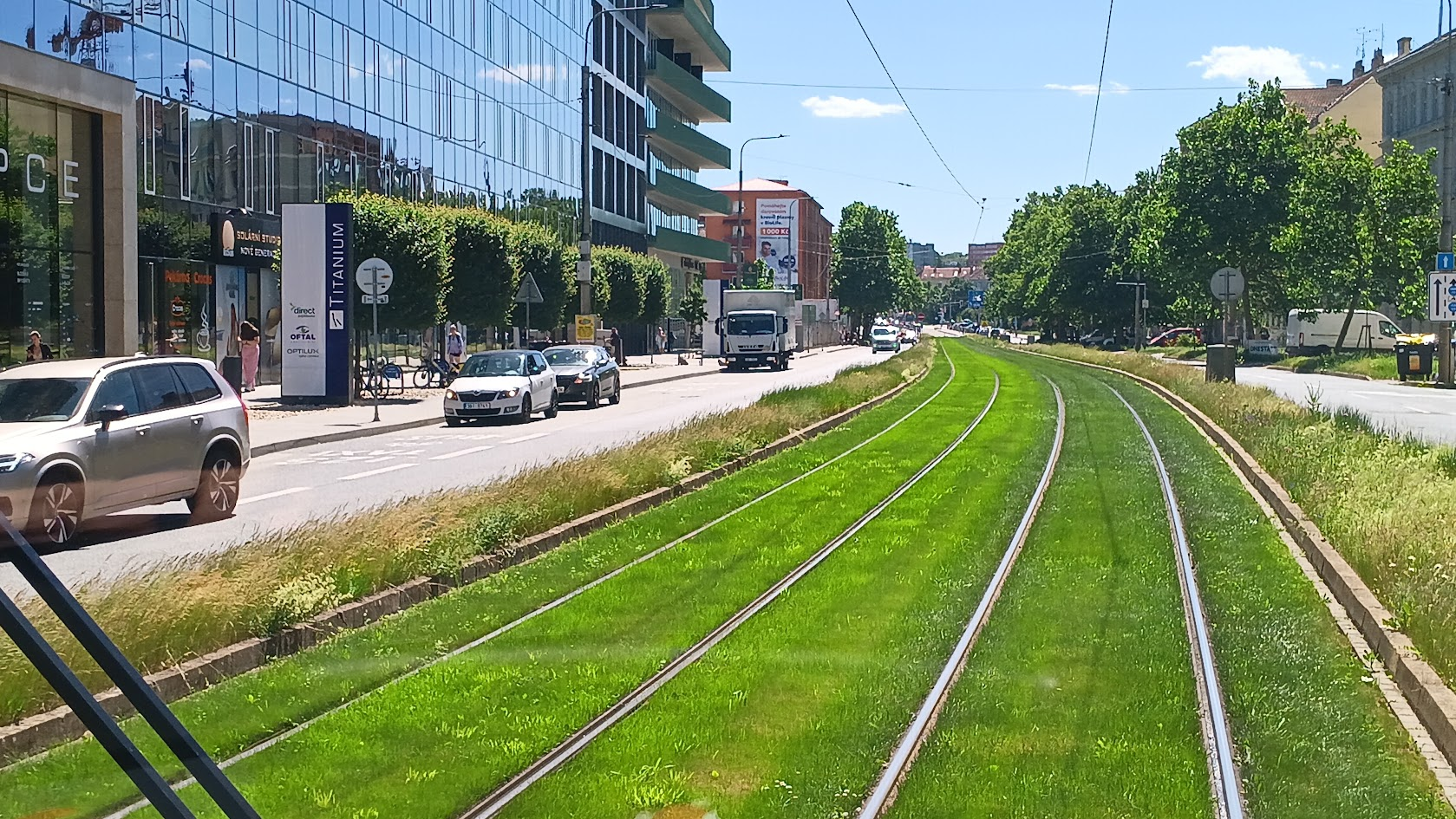
Brno: ul. Nové sady. Separate tramway track with “green tracks”. On both sides - meadow grasses of perennial cereals.
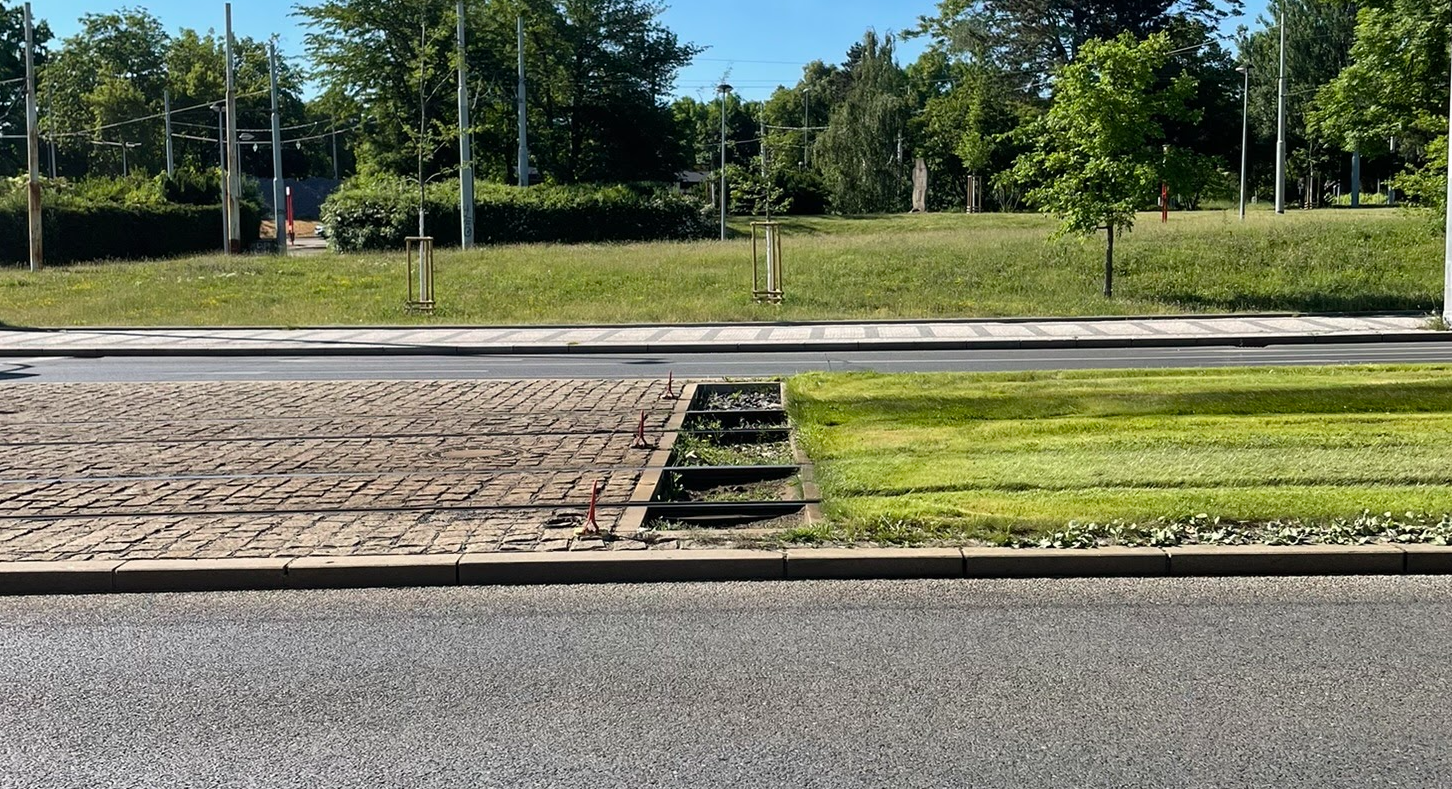
Prague: transition section of dedicated tram track
The transition from the paved surface near the stop to the “green tracks” is arranged with a ditch as a means of counteracting accidental or intentional vehicle movement onto the tracks.
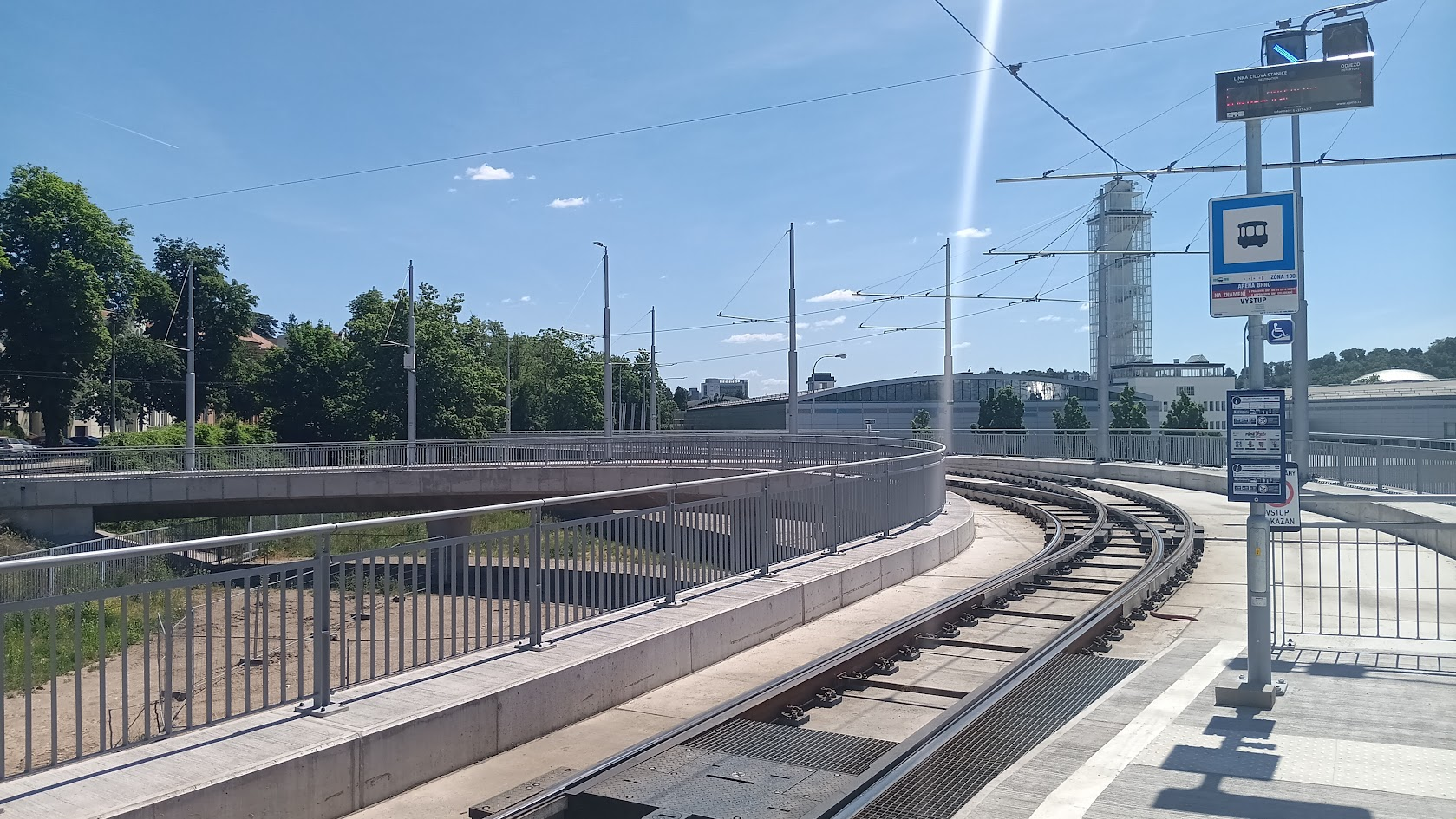
Brno: ul. Hlinky, stop Lipová, near the “Brno Arena”.
New infrastructure facility near the Pisárky depot in Brno. The tram track and stops are built on a trestle on a concrete monolithic bed, with open fastenings (without filling between the rails). The trestle was built to ensure the trams can turn around and to reduce empty runs.
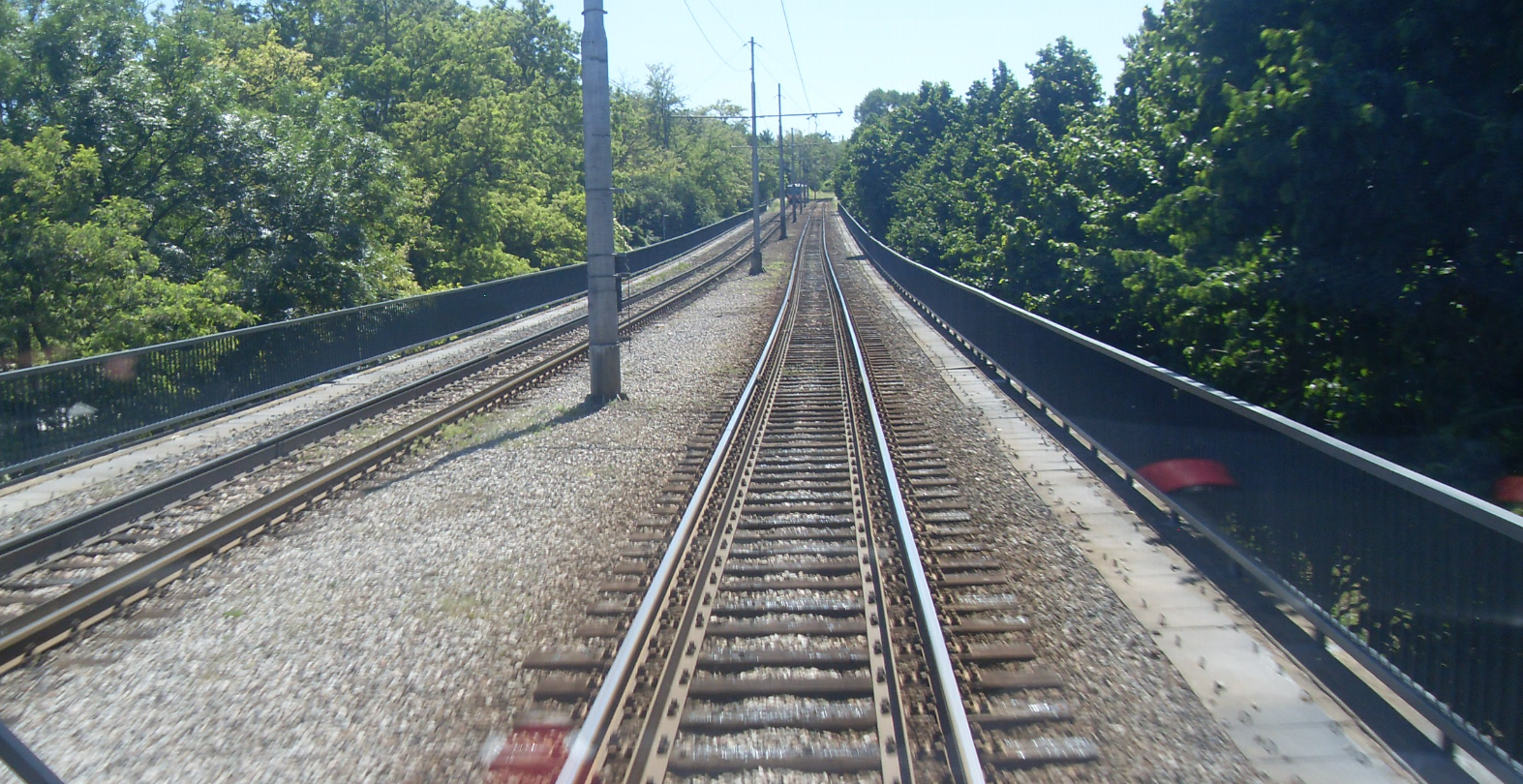
Brno: high-speed section (60 km/h) in the southwest of the city.
In Brno, on the high-speed tram section, on the overpass across ul. Vídeňská, a rail-sleeper grid (wooden sleepers) on a crushed stone base was fixed.
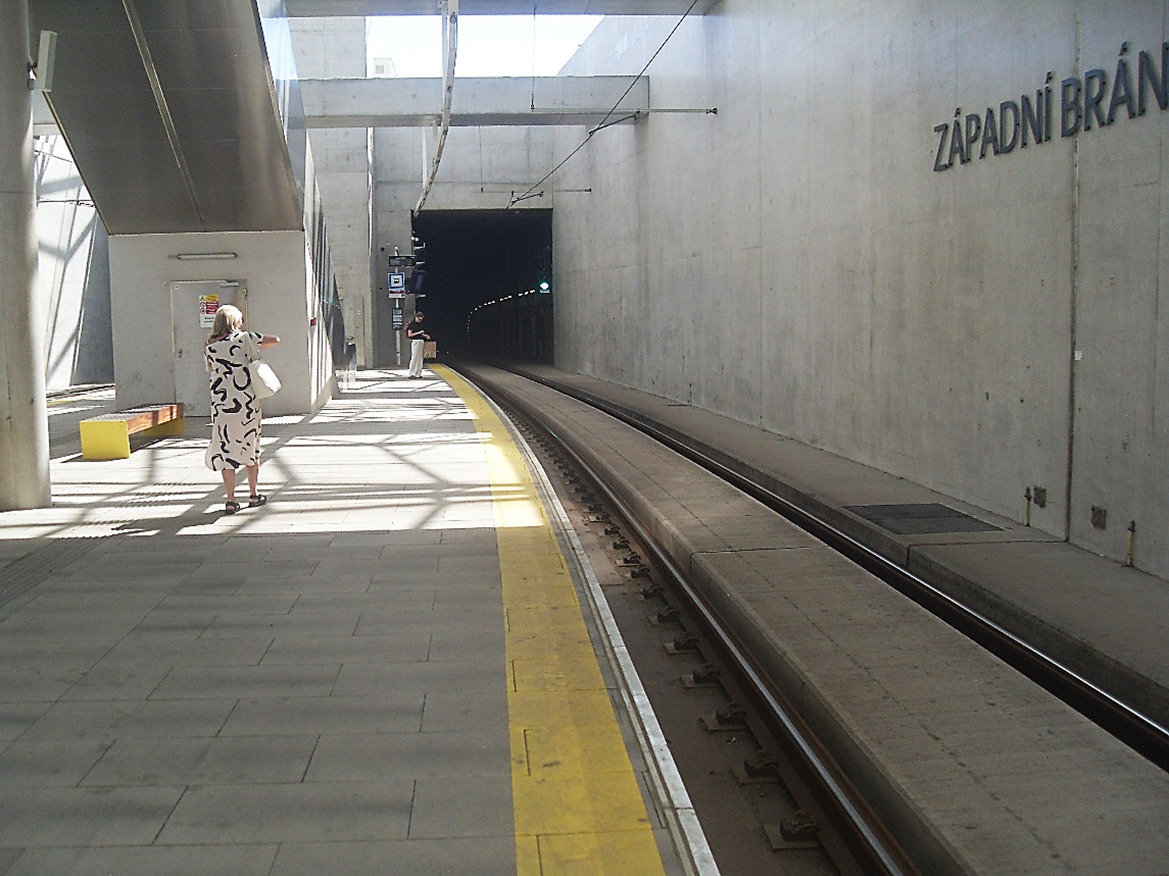
Brno: Západní Vrána underground tram station.
The station is located below ground level at the end of the high-speed section in the southwest of the city. The tracks run in a shared tunnel (diverging at the station), secured to a monolithic concrete base. The section is scheduled to open in 2022.
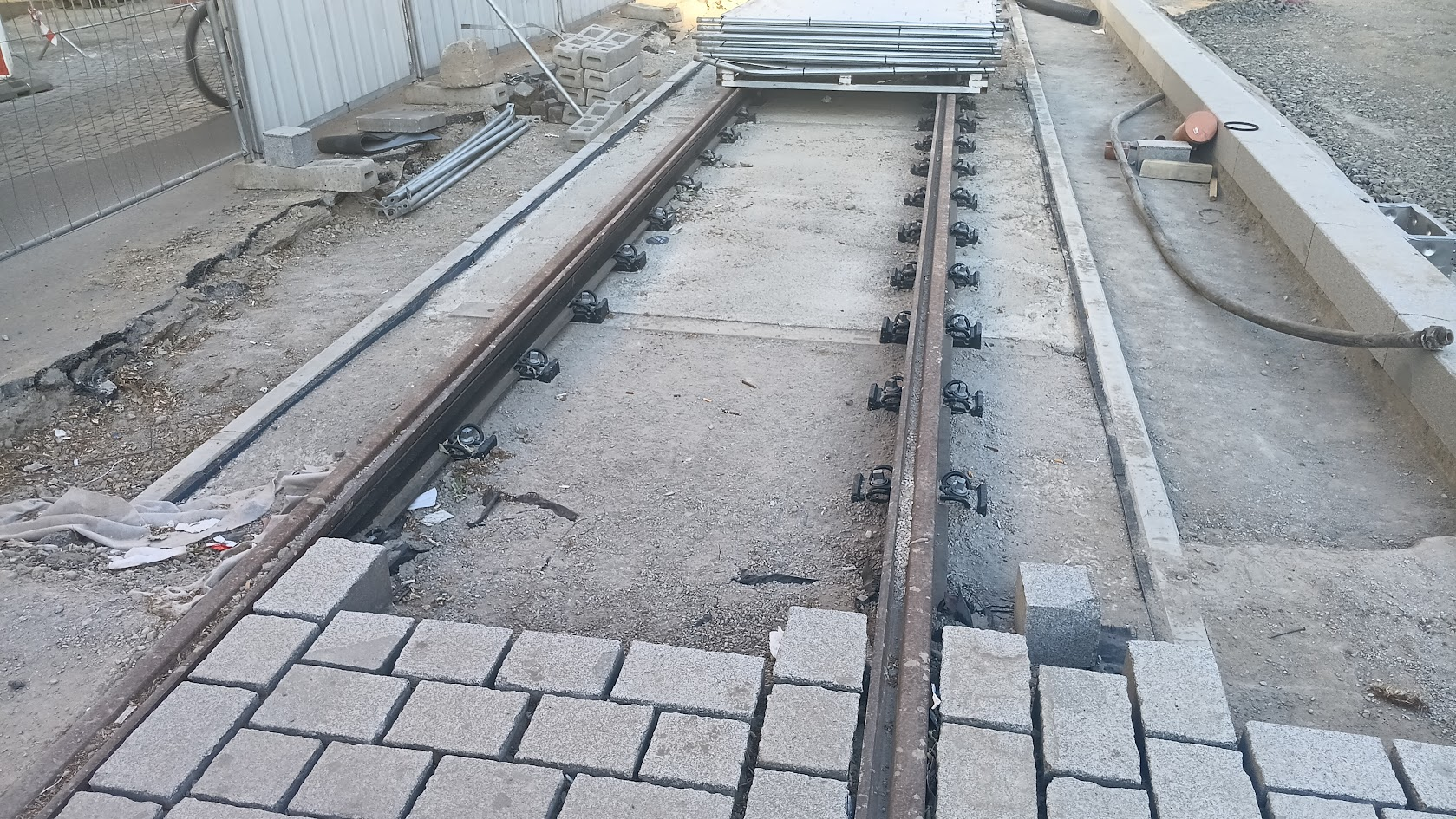
Prague: Václavské námestí, new construction of tram track for route No. 1.
Construction of a new tram line (a bridge between the existing sections) is underway on the famous Wenceslas Square. The space between the rails on a monolithic concrete base is being paved to match the surface of the entire square. Car traffic on the square will be limited.
As you can see, in the Czech Republic, a tram line can be organized in different conditions and with different infrastructure solutions: in a pedestrian zone, combined with motor vehicles, combined with other public transport, separated from the road by a curb and lawn, or with complete isolation, including on overpasses and in tunnels. There is no such separate type of transport as a “high-speed tram” in the Czech Republic. Each tram route is as fast as possible where it is possible and safe, carrying people from the outskirts of the city to the center, and becomes “slow” in pedestrian zones.
Depot arrangement
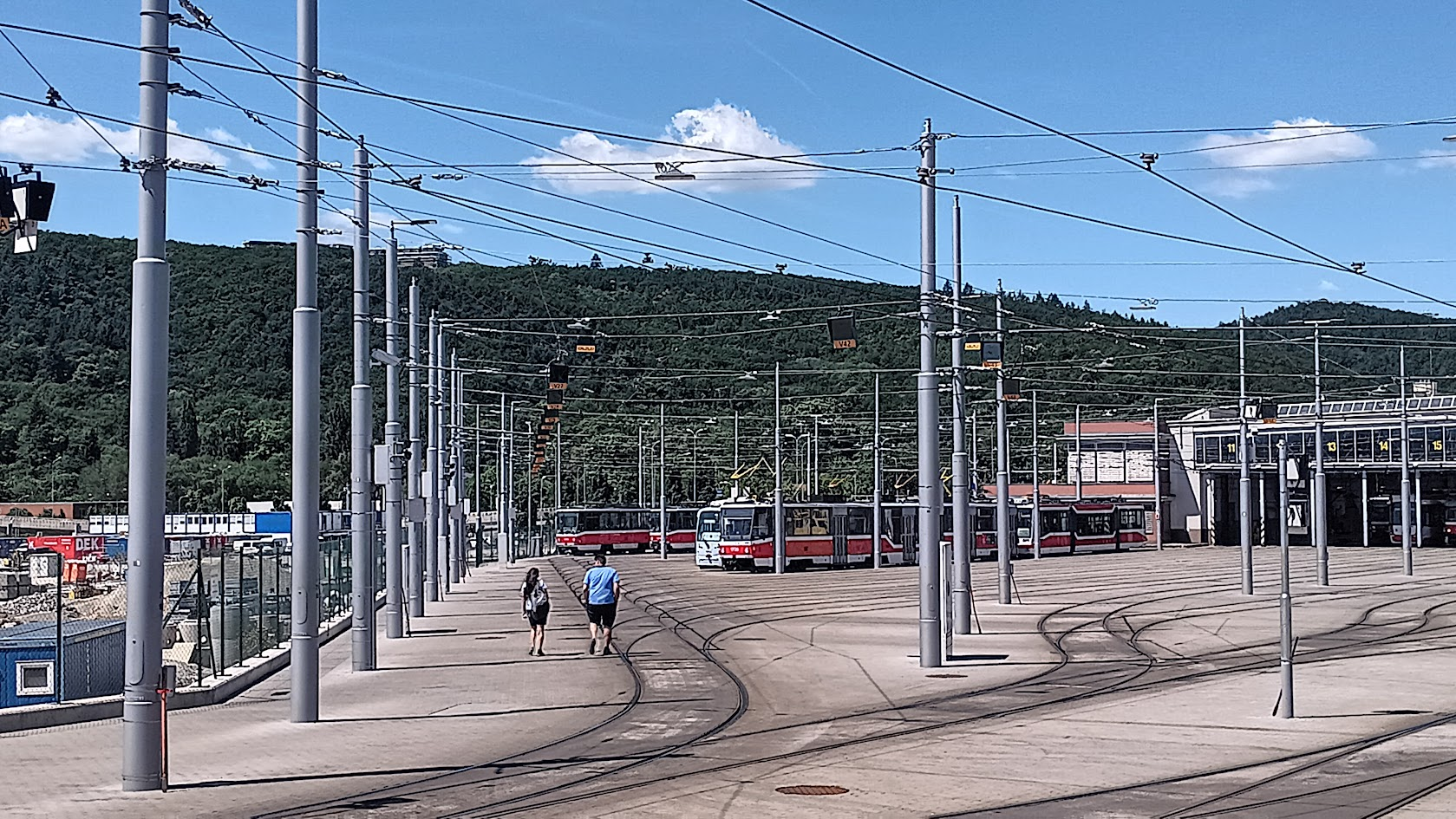
Brno: Pisárky tram depot. General view of the track park.
The territory of the Pisárky depot after the recent reconstruction is paved, the track development is arranged using successive switches, overlapping each other with crosses - to increase the space for trams to settle in the open park. Brno is proud that this is the "largest harp in the Czech Republic", because from above these tracks of sediment resemble a harp.
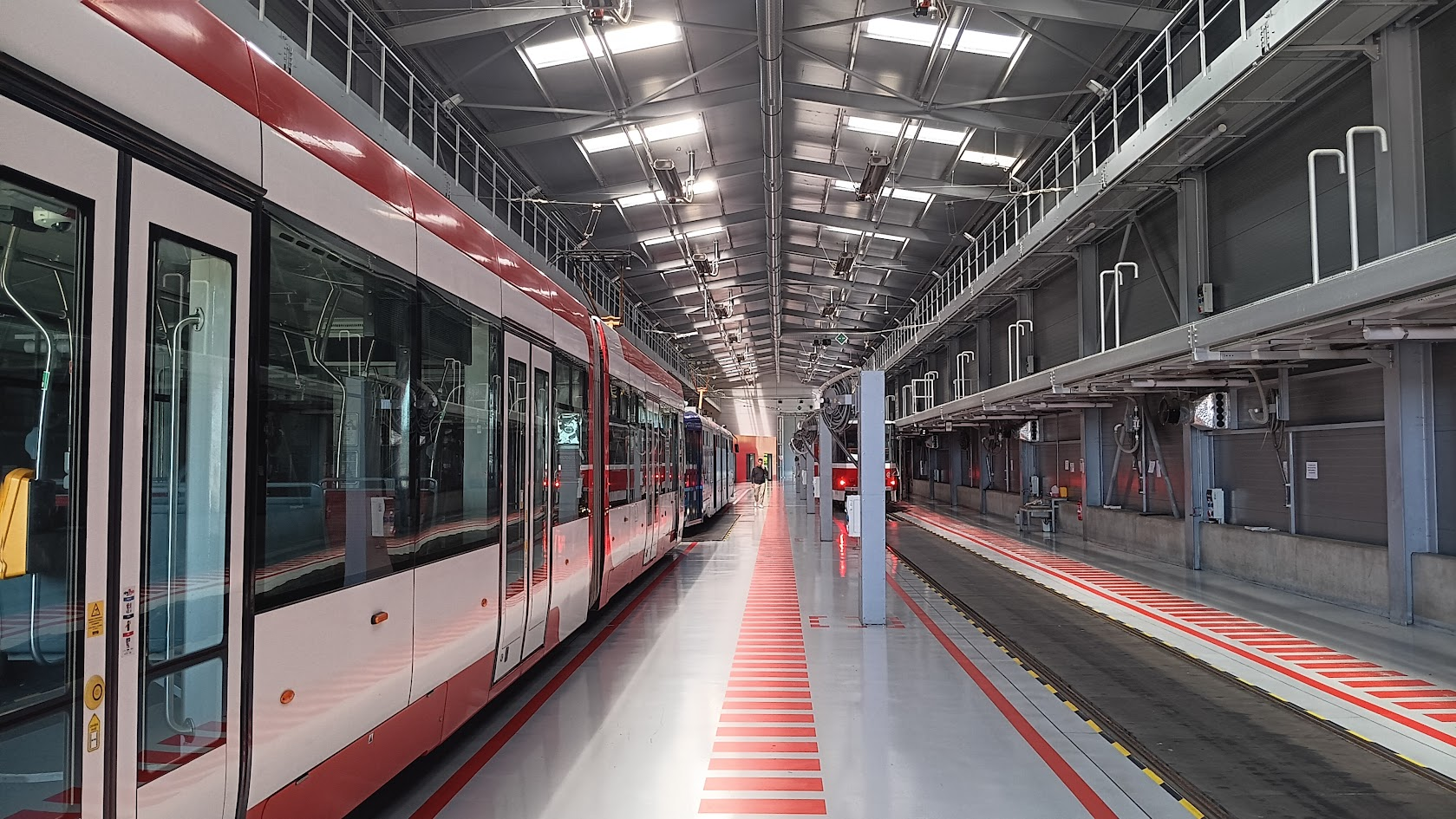
Brno: Pisárky tram depot. Daily car inspection shop.
The daily inspection shop was built recently. There is a trestle (tower) for inspecting the roof equipment of the cars and a space for inspecting the underbody equipment. The shop has markings for the dimensions of the trams and passageways.
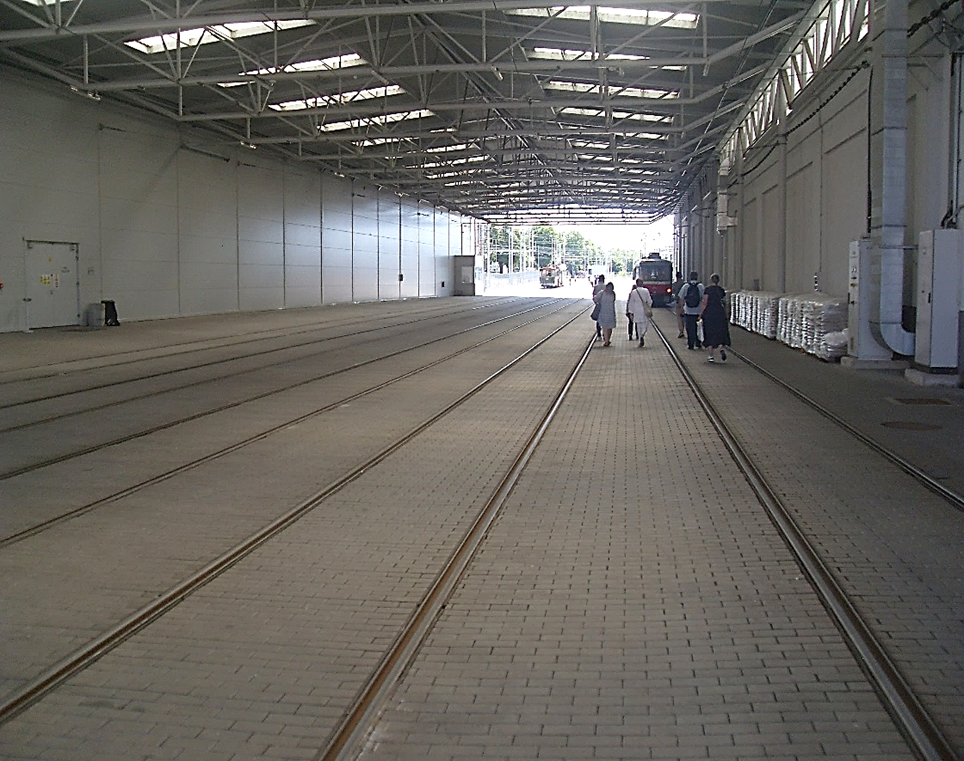
Brno: Pisárky tram depot. The depot has a covered area for arranging cars before leaving for the line.
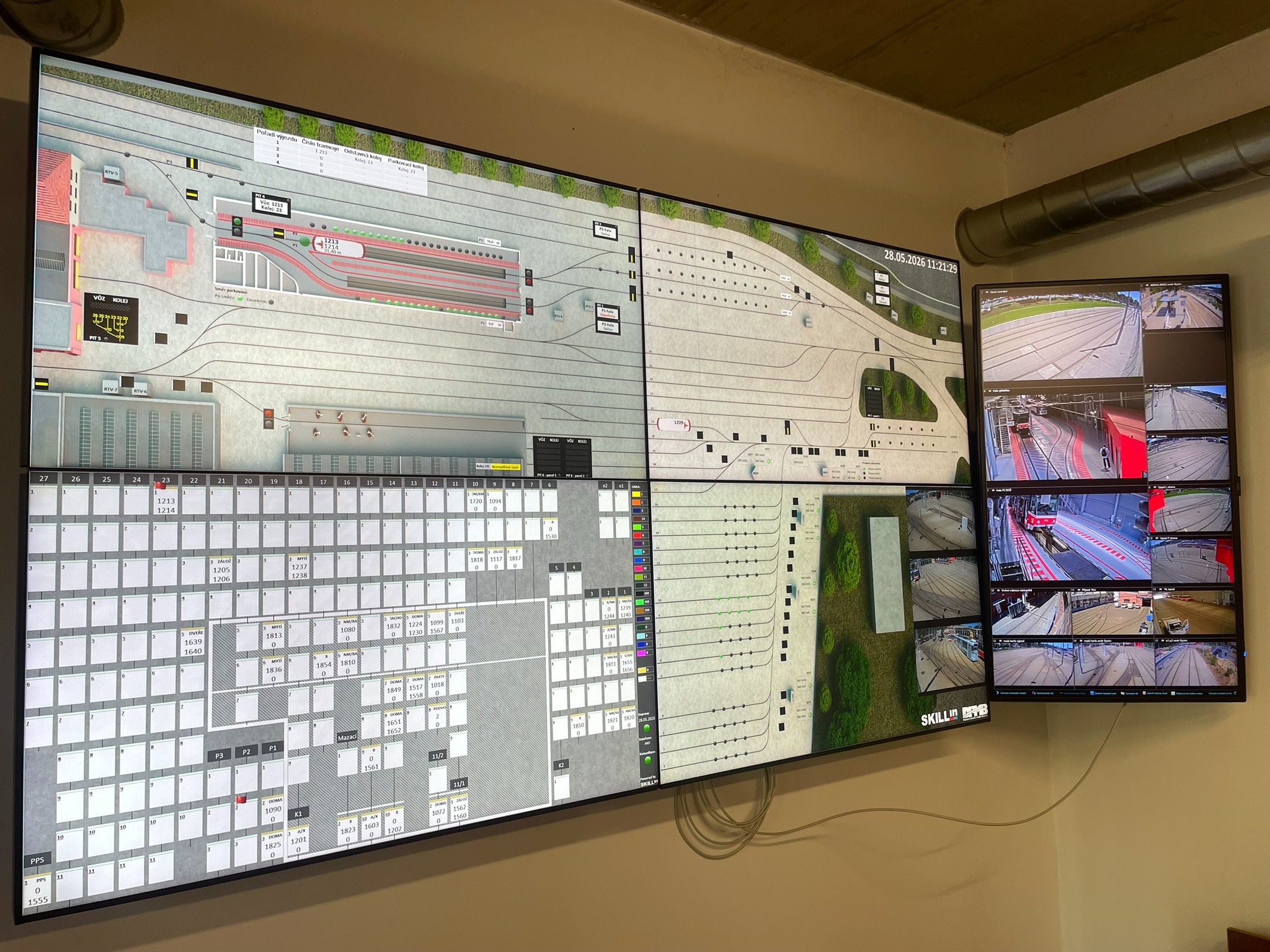
Brno: Pisárky tram depot. The workroom of the senior master.
The senior depot foreman's workplace has a computer system with monitors - for controlling the arrangement of cars and switching points with communication systems .
Conclusions for Ukraine
A field study of the Czech Republic's practices in the development of tram infrastructure showed that the Czech Republic's norms and practices lack excessive restrictions and prohibitions inherent in Ukrainian norms. The necessary safety requirements are provided by planning and engineering solutions, without the need for excessive investments and without violating the principles of barrier-free access. The knowledge gained and examples of infrastructure in the Czech Republic will be used in the preparation of proposals for the content of the new edition of the state construction norms of Ukraine for tram and trolleybus lines, which is being worked on by the public organization "Vision Zero" together with the State Enterprise "Scientific Research and Design and Technological Institute of Urban Economy".
The visit to the Czech Republic took place within the framework of the project "Removing Obstacles in the Regulatory Framework for the Development of Electric Transport in Ukraine", which is being implemented with the support of the European Climate Foundation in 2025-2026.
Text: Yuriy Lozovenko, Viktor Zagreba
Photo: Anna Atamanchuk, Volodymyr Kryvulya, Viktor Zagreba.