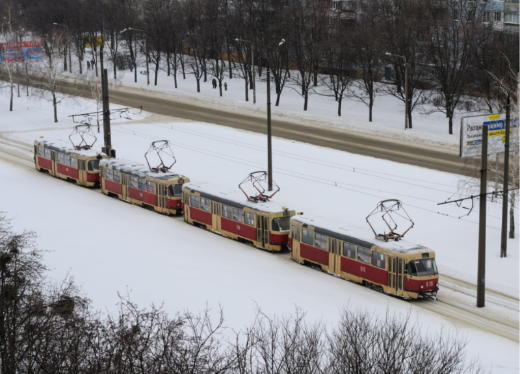
Municipal electric transport: how Ukrainian cities are "going" to new equipment
Berlin Economics presented a study of the industrial potential and prospects for the development of electric public transport in Ukraine, prepared in partnership with the Central Transport Service and the Vision Zero NGO with the support of the European Climate Fund (ECF).
( Original article from partners )
The official presentation of the study took place in Kyiv against the backdrop of the official opening of Ukraine's negotiations on EU accession and preparations for the Ukrainian Recovery Conference in Gdansk. So it is natural that its participants emphasized: strengthening the energy and transport infrastructure is not only an opportunity to update the transport fleet, but also a full-fledged vector of Ukraine's recovery with significant prospects for business development, stimulation of domestic demand and export opportunities.
The study, which Berlin Economics implemented in partnership with the Ukrainian Transport Authority and Vision Zero NGO with the support of the European Climate Fund (ECF), assesses the development opportunities of the electric public transport sector, identifies barriers that may hinder this development, and measures that will help overcome these barriers and make the sector a pillar for the country's recovery and integration with the EU. The key goal of the study is to develop a full-fledged strategy for the development of the electric public transport sector in Ukraine.
As Deputy Minister of Community and Territorial Development Maryna Denysiuk noted during the discussion of the presentation, which was held in partnership with the German-Ukrainian Chamber of Commerce and Industry, "the issue is not only to buy new buses or trolleybuses, but to ensure that these investments work for the Ukrainian economy, create jobs and develop our industrial capabilities."
Berlin Economics experts agree with this: "Electric public transport is an area in which Ukraine has very important innovative potential, which must be used properly and directed in the right context. Important concepts must be developed that must be added to value chains - this is very important in this area."
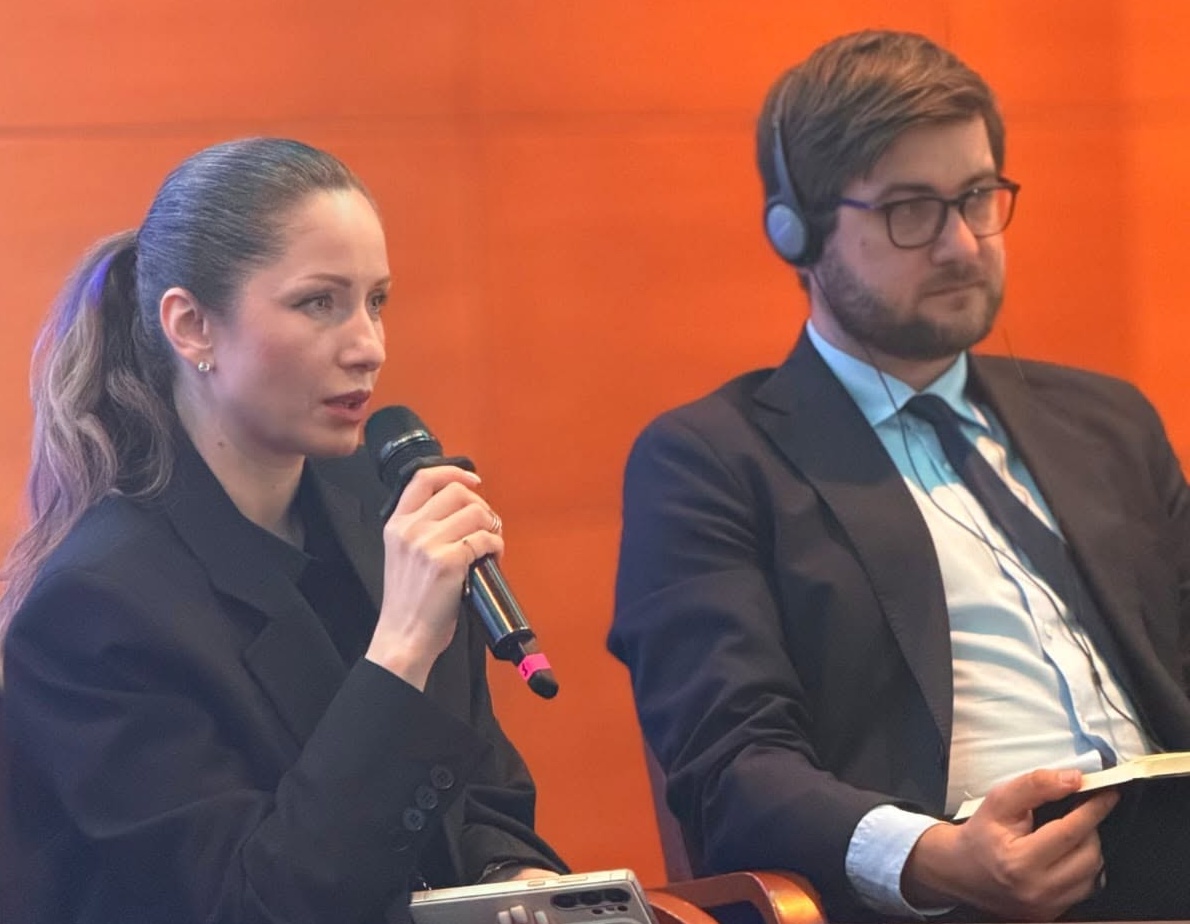
Maryna Denysiuk, Deputy Minister of Community and Territorial Development
Infrastructure first, rolling stock later
Supporting public electric transport cannot be considered only as an environmental measure, or as a separate purchase of trolleybuses, trams or electric buses. This is a matter of the quality of transport service, accessibility for passengers, barrier-free transport, energy sustainability for communities, reducing operating costs and modernizing urban infrastructure, stressed Maryna Denisyuk. Currently, based on data from the DREAM system (Digital Restoration Ecosystem for Accountable Management), the needs of all communities in this area amount to more than 480 billion UAH. "This is a fantastic figure and at this stage is even unattainable," noted Maryna Denisyuk. "It requires attracting all types of financing in order to cover these needs in the ten-year perspective. The program is aimed at modernizing urban electric transport systems. In particular, by updating infrastructure, rolling stock and related facilities."
When updating their electric transport fleets, it is important for Ukrainian cities to simultaneously move from the logic of purchasing transport units to the logic of a comprehensive transport project, the deputy minister emphasized. "If a city purchases electric buses, trams or trolleybuses, it must simultaneously plan a route network, charging and contact infrastructure, depots, energy capacity, maintenance, personnel training, the introduction of an electronic ticket, GPS monitoring and quality control of services," she says.
Touching on the topic of power outages due to enemy attacks, Maryna Denisyuk emphasized that these are temporary circumstances. The beginning of the negotiation process with the EU, which will involve the introduction of directives aimed at reducing greenhouse gas emissions, imposes on us the obligation to switch to electronic modes of transport for the cleanliness of cities. "Any military risks and uncertainties do not stop the European integration process," she emphasized. "Including in the field of electric public transport."
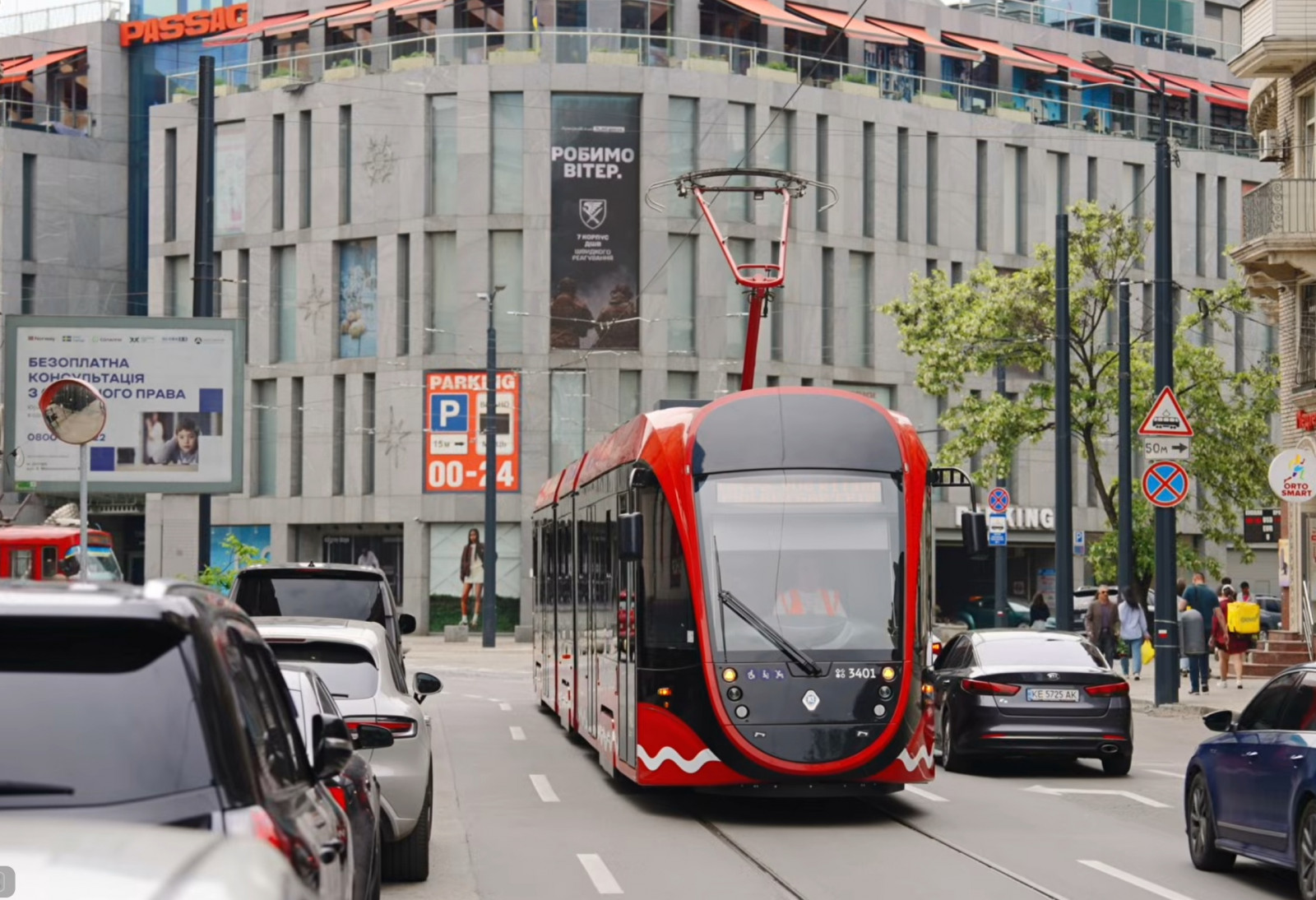
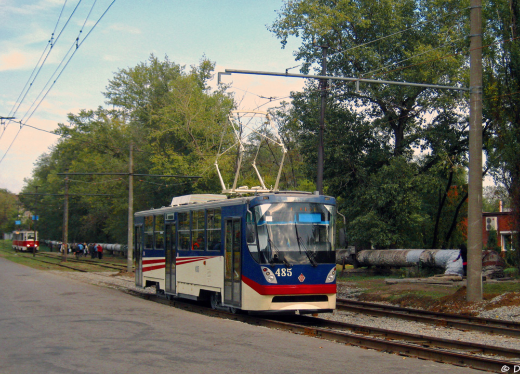
Dnipro, a new tram manufactured by Tatra-Yug. Even in wartime, Ukrainian cities continue to buy electric transport, and domestic manufacturers continue to supply their products
Strengthen the value chain
Presenting the results of the study, Berlin Economics expert Yigit Tahmisoglu noted that Ukraine already has a production base for electric buses, diesel buses, trolleybuses and trams. "If we apply adequate programs, we will be able to strengthen this sector, strengthen the value-added chain, and train new personnel, and the study shows how this can be done," he noted. According to experts' calculations, by 2027, the volume of production in this sector can be increased by 15%, and finished products can be supplied to Africa and Asia.
According to Yigit Tahmisoglu, on this path, it is worth starting from such drivers as the restoration and strengthening of the value-added chain, meeting the needs of the national rolling stock market, and modernizing public transport and infrastructure. "We see a strong emerging production base in the electric bus segment. We can also use the knowledge and capabilities from the production of diesel buses and transfer these resources to the production of electric buses and reach a competitive level," Yigit Tahmisoglu emphasized.
At the same time, he noted that Ukraine already has a strong production base of battery-powered trolleybuses. This is about high added value at higher levels of production, and we can work on greater integration of all sectors of production and scaling this sector to meet national public transport needs.
Many types of trams produced in Ukraine have a localization level of 48% to 95%, the expert draws attention. Development in this direction can allow updating the outdated fleet and developing existing production capabilities. Special attention is paid to strengthening capabilities in the domestic production of components and spare parts. This, at the same time, will allow connecting us with the European market.
Among the obstacles that prevent the electric vehicle market from developing, Yigit Tahmisoglu first of all named the lack of sufficient financial support. "State support is unstable, the market is counting on foreign investors," he noted. At the same time, he drew attention to the importance of developing battery production, emphasizing that research even indicates a reduction in investment in this area.
Another obstacle is the lack of a general policy for the development of the public electric sector. "Contracts for production are decreasing, substations for electricity production are quite outdated, and the infrastructure is too," the expert points out. "When new trolleybuses or trams are purchased, but outdated infrastructure is used, the desired levels of technical characteristics of the new transport are not achieved."
The study shows that currently, virtually all cities in Ukraine depend on external borrowing for public transport renovation. The process of accessing loans is very slow. It often takes up to 9 months to receive the first tranche, and tenders take a very long time.
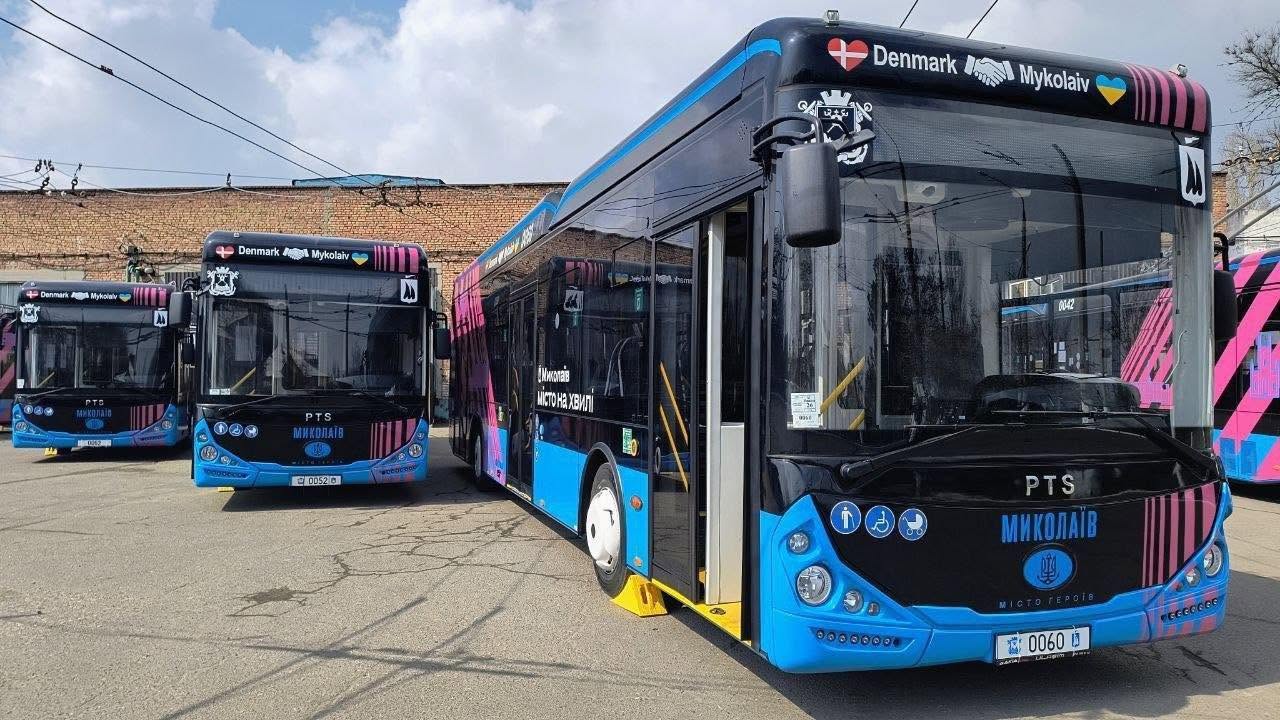
However, certain requirements for electrification of public transport exist and they are quite real. Cities with a certain population have obligations to reduce greenhouse gas emissions. Not to mention large cities. National policy promotes the transition to electric transport. There are plans to purchase 9 thousand units of electric transport, which will be financed within the framework of European loans. But Ukraine also lacks modern municipal mobility plans that would become part of the national plan.
The lack of sufficient funding also affects Ukraine's export capabilities in the field of electric transport, the study notes. Before the war, our country exported trams to Egypt, as well as small diesel buses. Currently, the barrier to possible export to the EU is certification. It requires more than a million euros and 1-2 years of testing on European markets. However, this area is not funded at all in Ukraine, which makes domestic manufacturers uncompetitive. European manufacturers have the advantage of providing electric transport services for 7-8 years, while Ukraine cannot provide such a long guarantee. Domestic manufacturers may currently have a lower price, but due to the lack of approved European technologies for batteries and other elements, they do not have access to foreign markets. Currently, European manufacturers dominate there, and there is also fierce competition from China.
But in Europe there are plans to expand the fleet of electric vehicles, and there are also almost a thousand projects for the production of batteries for electric vehicles. Ukraine has a strong position in this segment and can compete in the trolleybus market in the best case scenario, the study notes. If the production of electric vehicles in Ukraine follows this scenario, an additional 387 million euros in added value could be added to the economy. And there will also be added benefits associated with the absence of the need to purchase diesel, which will allow saving from 9 to 15 million euros.
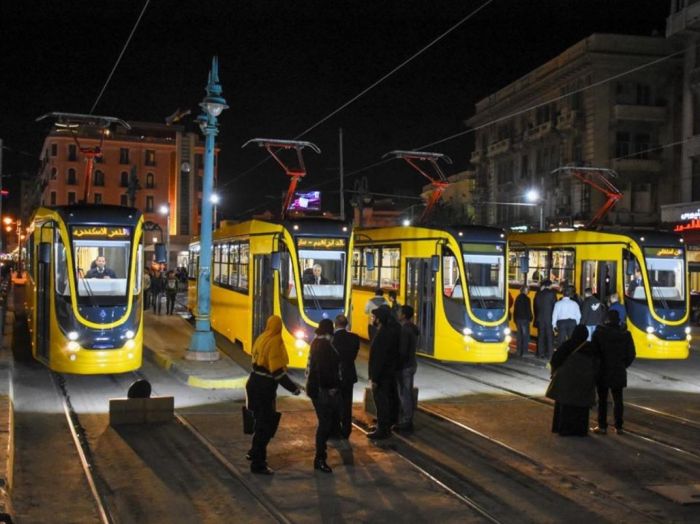
Before the full-scale war, a batch of Ukrainian trams was purchased by the Egyptian city of Alexandria
The problem of long-term planning
Manufacturers also emphasized the importance of a systematic approach to financing and playing the long game. "We all talk about investments, but investments without a guaranteed sales market are very risky," says Nataliya Bachurna, Sales Director of the Chernihiv Automobile Plant. "The classic production model works based on an assessment of forecasted demand. You can work on a stockpile and create a buffer zone, you can establish long-term production, but the electric vehicle market is very dependent on a specific contract. We do not have the opportunity to make a certain number of units "on stock", since it is the customers, whom we know by face, who will order each unit with certain technical characteristics. We do not know what the contract will be with this or that community, what they will want to see - what innovations."
Such production of public transport requires large working capital and large supply chains of components, including imported ones. At the Chernihiv Automobile Plant, they say that the purchase of components alone can take from 3 to 6 months. Therefore, without multi-year contracts for the renewal of rolling stock from municipalities, it is difficult to talk about proper strategic planning. "We have short-cycle production and instability. If the state had developed guaranteed multi-year plans for public procurement, this would have allowed us to push the development of the industry forward," Bachurna summarized.
At the same time, she also confirmed the information disseminated in the study about the long duration of tenders announced for the purchase of transport for Ukrainian cities at the expense of international donors: "By submitting a tender offer in 2024, we can reach a contract in 2026, and the price offer does not change. This requires a lot of financial resources, associated, for example, with very expensive bank guarantees."
At the same time, she said that the company she represents has a prototype of electric buses, but there are no orders for them. The production has also introduced a system for modernizing trams, which allows you to leave the old trolleys, but save up to 40% of electricity compared to old cars. Such modernization was once popular in the Czech Republic and Switzerland. Its cost is two to three times cheaper than purchasing new trams. But again, there are no orders. Customers are either waiting for financing to buy new cars, or are trying to carry out such modernizations on their own.
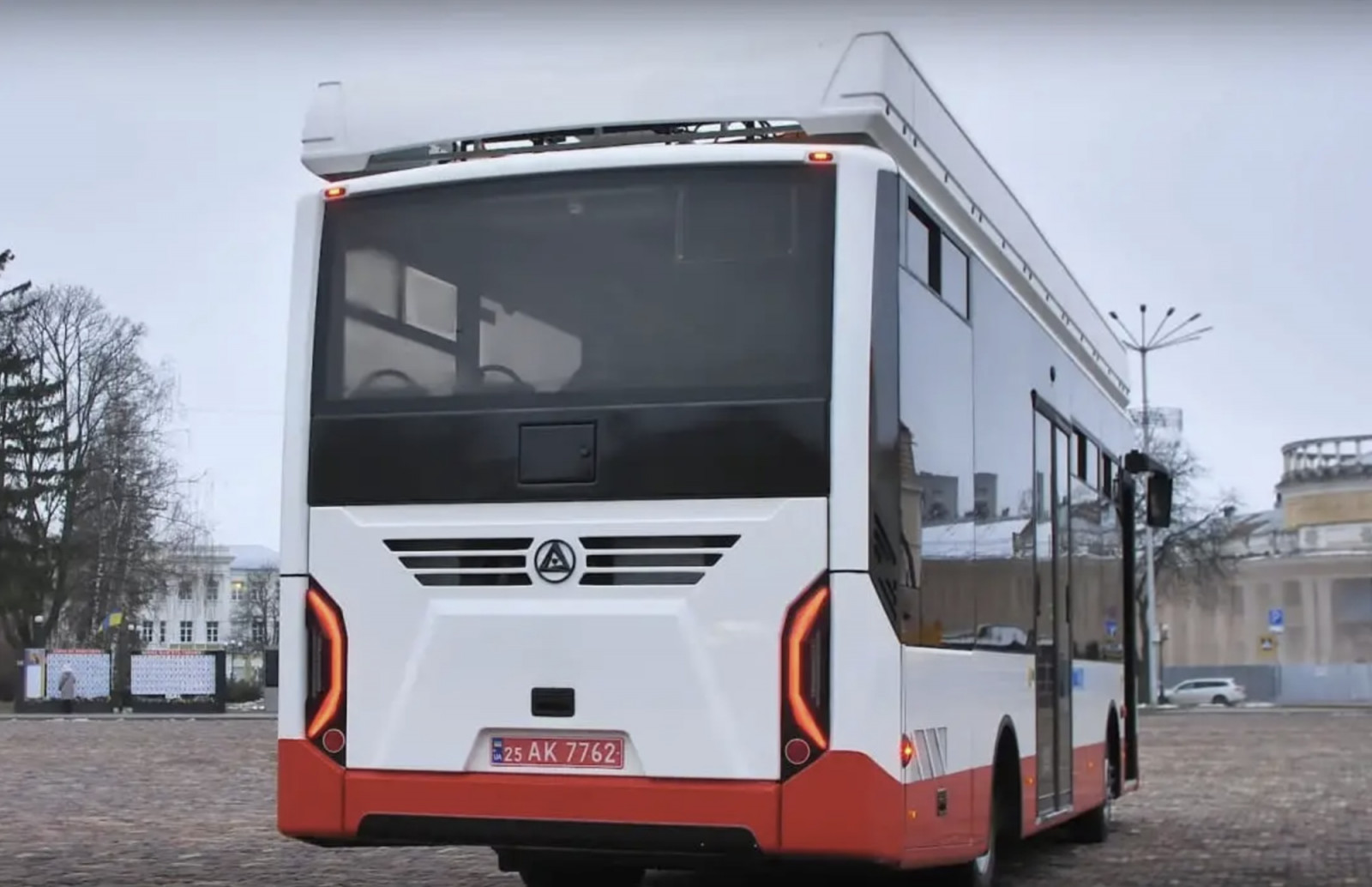
Chernihiv has developed its own electric bus model. However, our cities are currently in no hurry to purchase such vehicles.
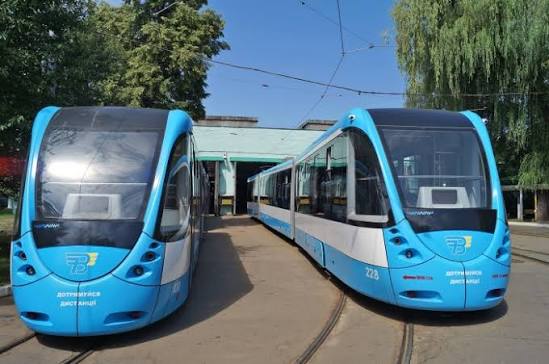
One of the striking examples of tram modernization based on municipal enterprises is Vinnytsia VinWay
Deputy Director of the Khmelnytskyi Municipal Enterprise "Electrotrans" Natalia Svystun-Smolyak, in fact, emphasized the importance of creating production and repair facilities on the basis of municipal public transport enterprises. In Khmelnytskyi, their own training and production site was created back in 2022. Students of higher vocational schools who have related professions - electricians, welders, body builders - were involved in the work. They are given the opportunity to undergo practice, in fact, improving their dual education in this way. The enterprise also closely cooperates with the Khmelnytskyi National University, namely with the Faculty of Engineering Machine-Building Technologies. Leading teachers in engineering specializations work here part-time. This allows us to overcome the personnel shortage that arose in connection with the mobilization processes. "It is impossible to talk about transport development and not mention who will implement all this," Natalia Svystun-Smolyak is convinced.
The loan that Khmelnytskyi received from the EBRD for the renewal of the transport fleet provides for a total amount of 16 million 555 thousand euros. Of these, 10 million 600 thousand euros are loan funds, 4 million 555 thousand are grants. One and a half million euros are co-financing from the city council. Half of the funds went to the purchase and renewal of transport. The delivery of all 44 new vehicles produced by the Chernihiv Automobile Plant has already been completed. The remaining money is provided for the complete modernization of the repair base. Thus, the city has clearly defined step-by-step updates in cooperation with international institutions until 2029. "With our own funds, we can update no more than 20% of anything," says Natalia Svystun-Smolyak. "We have 10 traction substations in the city. Their work is already controlled by telemechanics, but we also need to update the traction switches - this is very expensive. We are planning these steps in unity with European donors."
At the same time, she noted: the study indicates the implementation of an automated fare payment system (AFPS), passenger flow tracking, and digital dispatching. "AFPS has been implemented in our electric transport since 2021. Our electric transport is completely cashless. New trolleybuses and some of the older ones, the "Bogdan" brand, are equipped with passenger flow systems. We can actually compare data on payments made under the AFPS with real passenger flow. I know that only a few cities have this, but we have it," the speaker shared her experience.
According to her, the city is working on the implementation of sustainable mobility. "Electric transport is a special type of transport. And we manage to form a more positive attitude towards it," she says. Currently, trolleybuses are extremely popular for rental for birthdays or graduation parties. The city has organized unlimited broadband Internet in each car to lure students and schoolchildren away from private carriers. "Our percentage of paid passengers has increased," says a representative of the municipal enterprise. "Everyone is switching to new equipment."
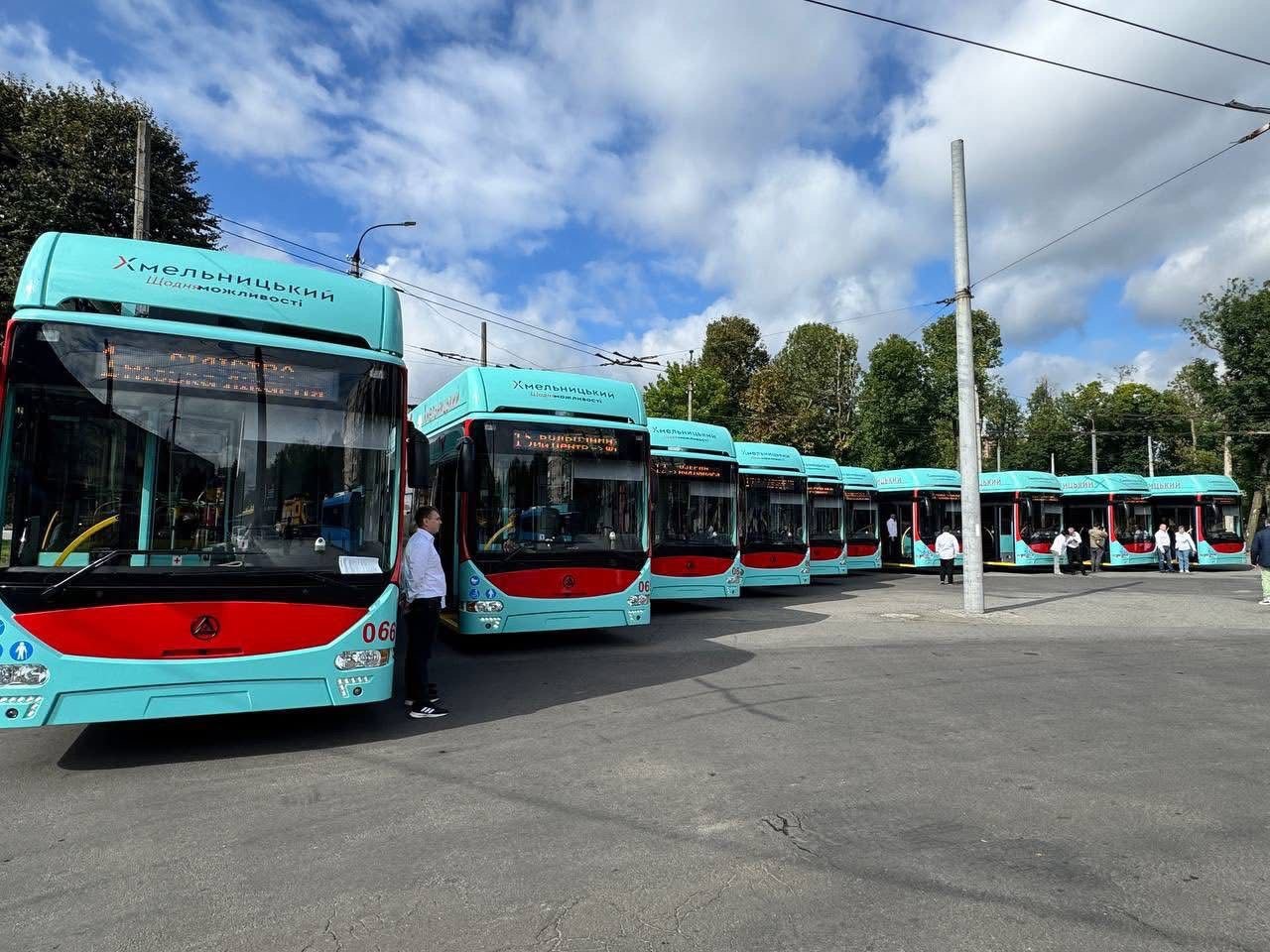
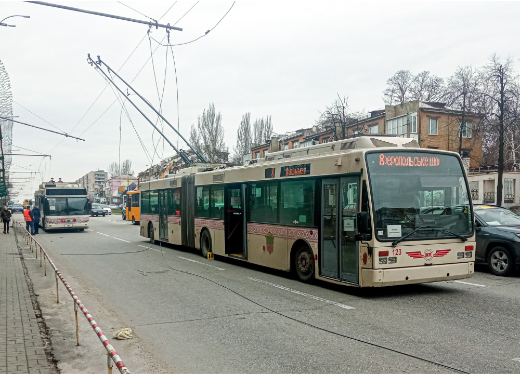
The purchase of 44 new trolleybuses for Khmelnytskyi, partly financed by the EBRD, became one of the largest examples of rolling stock renewal after 2022
Despite the fact that Ukraine has to deal with the consequences of barbaric Russian attacks every day, now is the time to rethink urban mobility as a whole and its importance for ensuring the quality of life in the city, believes Serhiy Vovk, director of the Central Transport Service. The public transport system in the city is complex, as it includes both municipal and private transport. "It is precisely cooperation, not competition, that should be an element of the development of transport policy as such," he stressed. "It is absolutely unacceptable when we hear that our municipal transport is completely digital, and scheduled services operate for cash in the "shadow". Under such conditions, it is difficult to talk about competition."
Another issue is the combination of different modalities. Cities are actively developing, new types of transport are emerging, the movement of which is still not regulated or regulated to a very limited extent, suburban transport is being added... "It is desirable to combine all these modalities into one system so that the city can see where and how it is moving," notes Serhiy Vovk. At the same time, he drew attention to completely new challenges associated with the war. First of all, in the context of demography. Cities in the west of the country have received new residents as a result of internal migration from the east and center. And these are new passenger flows that need to be taken into account. A very important story is the energy infrastructure, which is also currently in the stage of active reconstruction. "Transport, as one of the main energy consumers of the city, should also be a key driver in the formation of this system," the expert notes.
The Berlin Economics study creates a solid basis for the development of the electric transport market, both in terms of domestic demand and export opportunities, and supply - new and modernized equipment and infrastructure solutions of Ukrainian production. The experts who participated in the study separately emphasized that, provided that consistent and adequately provided state support, the same amount of investment can increase domestic production capacity, ensure emission reductions and position Ukrainian manufacturers in the European value chain in the urban transport sector over the next decade.
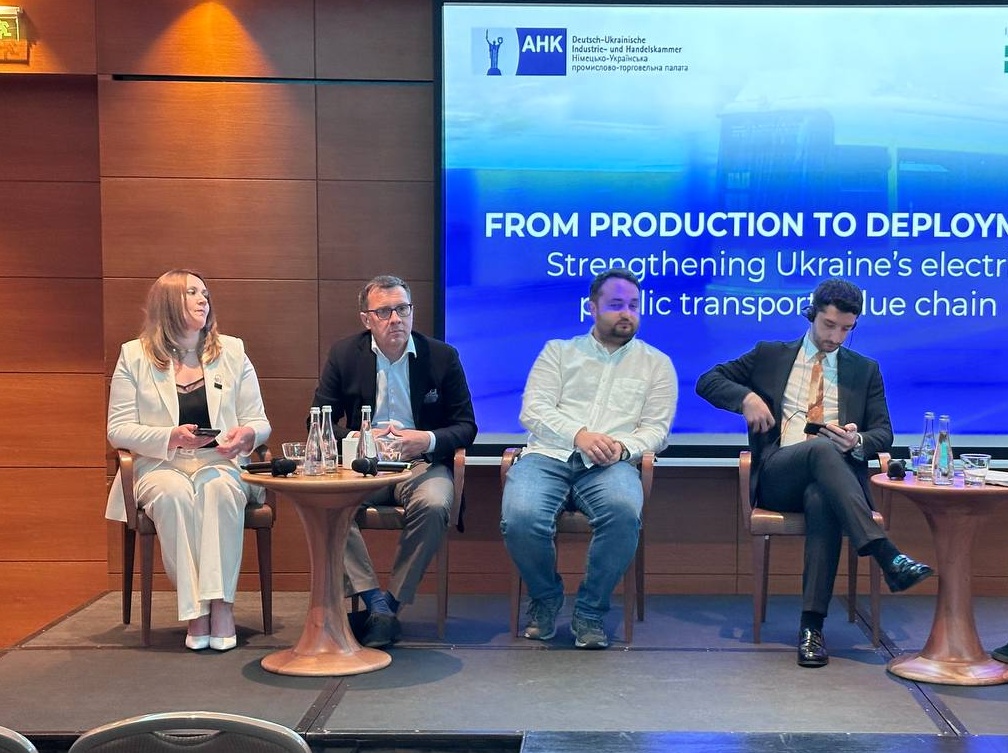
Berlin Economics presented a study of the industrial potential and prospects for the development of electric public transport in Ukraine, prepared in partnership with the Central Transport Service and the NGO Vision Zero with the support of the European Climate Fund (ECF)