

The fifth Urban Mobility Forum was held in Lviv on September 7-9, 2026 , organized by the CIVITAS and CIVINET teams in partnership with the NGO “Vision Zero”.
A feature of this year's Forum was the wide presence of representatives of the central state authorities - government officials, members of specialized parliamentary committees, delegates from regional state administrations, as well as, in addition to the traditional topics of sustainable urban mobility and traffic safety, - the presentation of directions of a nationwide scale - such as the National Transport Model of Ukraine, the TEN-T transport corridor network, prospects for the development of the Eurogauge (1435 mm) in Ukraine, the development of international logistics, ports, the reform of Ukrzaliznytsia (in particular, the direction of suburban transportation), necessary changes to legislation, etc.
A significant part of the speeches was devoted to the development of micromobility, transport modeling, digital databases and the general digitalization of urban mobility services, accessibility for low-mobility categories.
The team of the NGO “Vision Zero” proposed to somewhat reduce the high expectations for the development of the transport industry in the cities and regions of the country, given the ongoing full-scale war of Russia against Ukraine. Due to the significant economic and social losses of the state in the fifth year of the hot phase of the full-scale aggression of the enemy, it is necessary to consider a more pragmatic approach to the present and the foreseeable future and focus on the goals of sustainability, management of available limited resources and management of losses in the transport industry, which are inevitably growing as a result of Russian attacks. Kateryna Lozovenko spoke on behalf of the NGO “Vision Zero”.
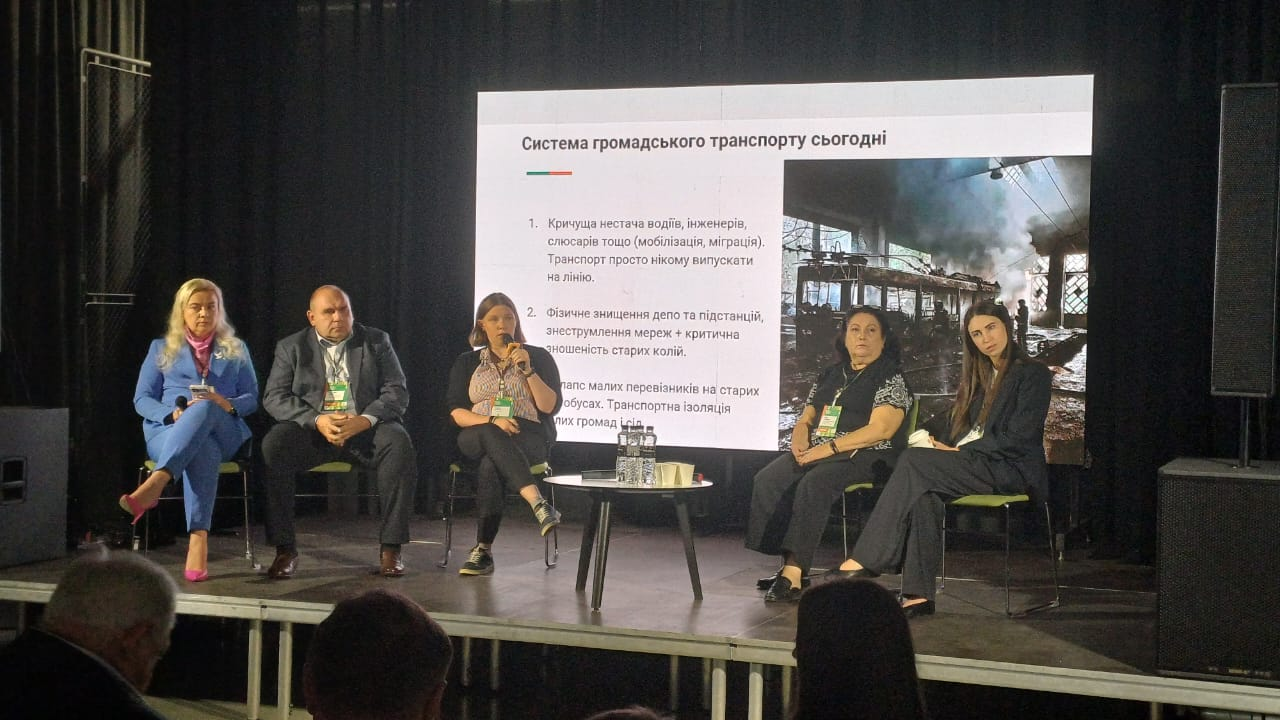
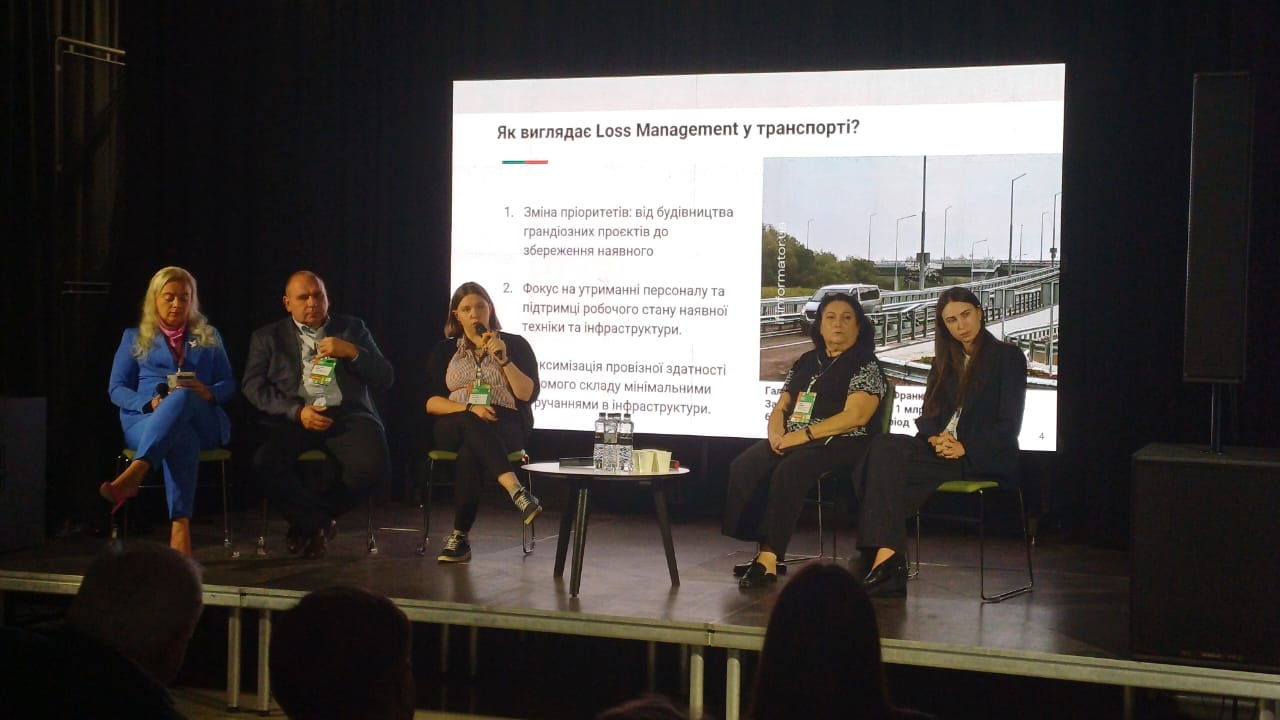
Key challenges and risks were highlighted, particularly in the field of public transport in cities and communities:
- A glaring shortage of personnel, particularly qualified specialists, due to general mobilization and the outflow of the population abroad: there is no one to send transport on routes.
- Physical destruction of infrastructure, including energy and rolling stock storage, as well as critical deterioration of linear public transport infrastructure.
- The collapse of small and private carriers, especially suburban ones, particularly on the periphery of regions, in remote communities: transport isolation of many villages, towns, small cities and entire communities.
It was proposed to review priorities and activities in the transport sector , in particular:
- Change priorities: instead of grandiose construction projects worth billions of hryvnias, focus on preserving, maintaining, and protecting existing assets.
- Shift the focus from large-scale development plans to retaining staff and maintaining the working condition of existing equipment and infrastructure.
- Maximizing efficiency at minimal cost: increasing carrying capacity by accelerating transport turnover and minimal interventions in infrastructure.
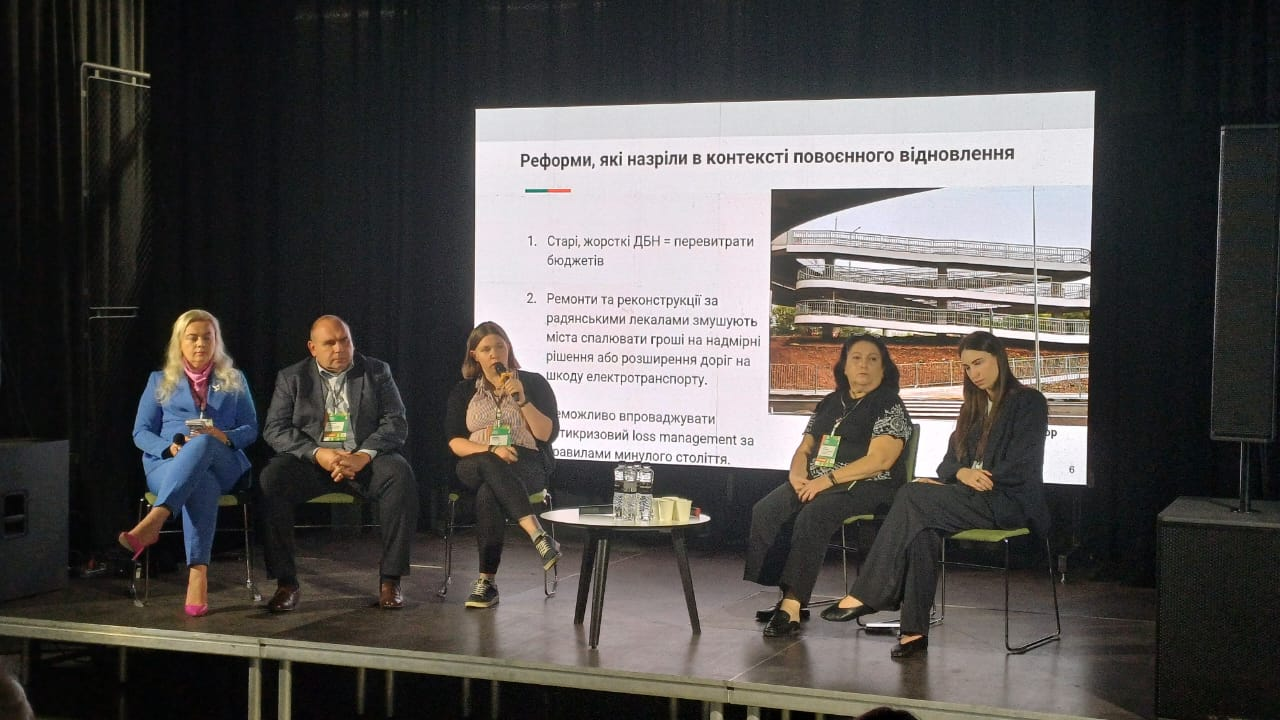
The necessary changes and reforms that were needed in the context of military stability and post-war reconstruction were mentioned:
- The old, overly rigid and directive regulatory framework leads to budget overspending on development projects in the transport sector, because under current regulations, it's either a "perfect world" or nothing at all.
- Soviet-style repairs and reconstructions force cities to burn money on overly expensive solutions or road expansions to the detriment of sustainable mobility and public transport.
- It is impossible to implement anti-crisis loss management in wartime according to the “peaceful”, often economically unjustified rules of the last century.
“Amidst a full-scale war that has already entered its fifth year with no end in sight, it is unproductive to speak solely of large-scale post-war development. Our priority must be implementing the management of inevitable losses — an approach that entails optimizing processes, preserving existing resources, and achieving the greatest possible impact with minimal expenditures,” said Kateryna Lozovenko.
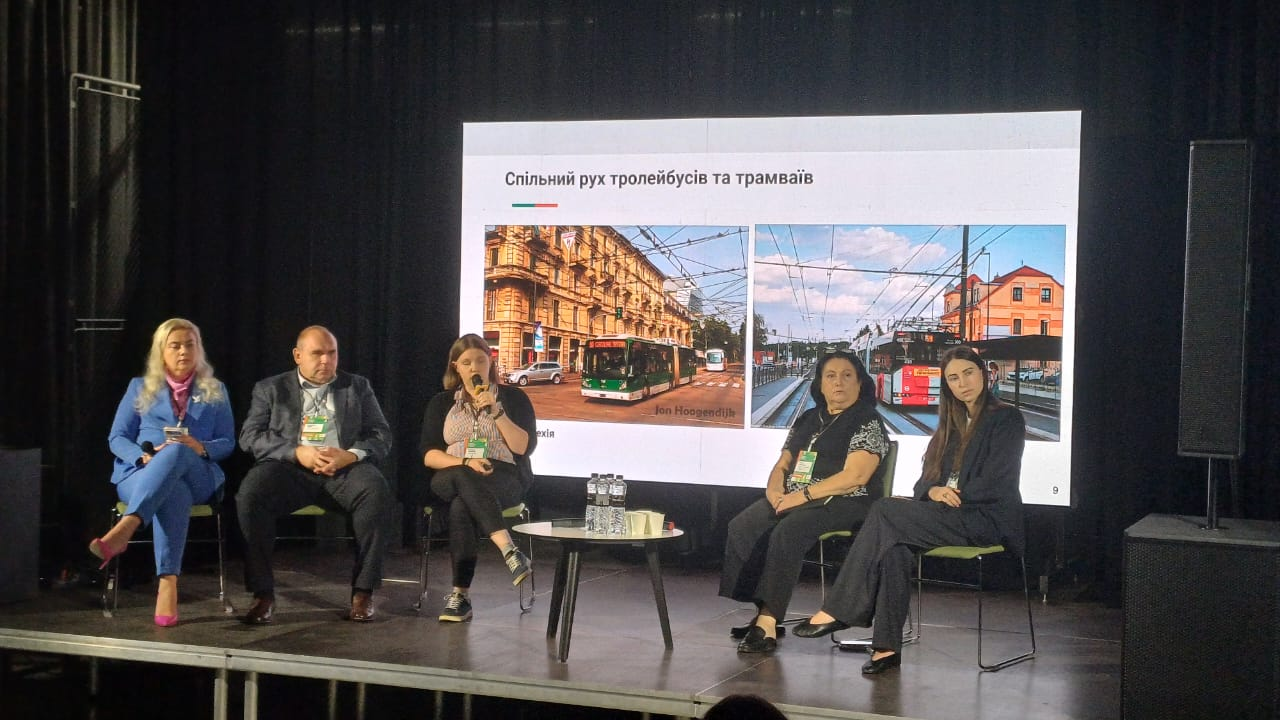
It was mentioned about the work on the draft of the new edition of DBN V.2.3-18 “Tram and trolleybus lines” , designed to solve the above-mentioned problems of the strict directiveness of state construction standards, which complicate the operation and hinder the development of electric transport in cities and communities. The example of work on these DBN shows the key needs for modernization and deregulation of the entire regulatory framework of Ukraine , namely:
- Updating the DBN according to the principles of parametric and target-based standardization methods instead of the prescriptive (directive) method - in accordance with the Law of Ukraine "On Building Standards".
- Harmonization of national norms and standards with the EU regulatory framework, in particular with European standards (EN) and best national practices of advanced member states.
- Decentralization and liberalization of norms: the power to make decisions (what, where and how to build) should be transferred from the state to the local level as much as possible - it should be decided by communities, customers (represented by the management structures of local governments), enterprises - infrastructure and transportation operators, design engineers (responsible for design decisions), civil society as end users of the infrastructure. Everything that does not contradict the requirements of safety and reliable operation should be allowed, and the best solutions will be chosen locally, based on real needs and opportunities.
Deregulation of legislation and the regulatory framework, a departure from rigid Soviet patterns, and the transfer of power to communities to make operational and strategic decisions on the ground will allow not only to survive during a full-scale war and preserve the transport industry, but also to receive an impetus for high-quality, people-centered development of transport during the post-war reconstruction of Ukraine.